

ALDO JACOBER

Excerpt from the book “Italian Living Design” by Giuseppe Raimondi.
In the 1960s Aldo Jacober was active in the fields of both design and architecture and was already well known for a best-selling folding chair, manufactured by Bazzani, that had won a prize at the 1966 Fiera di Trieste.
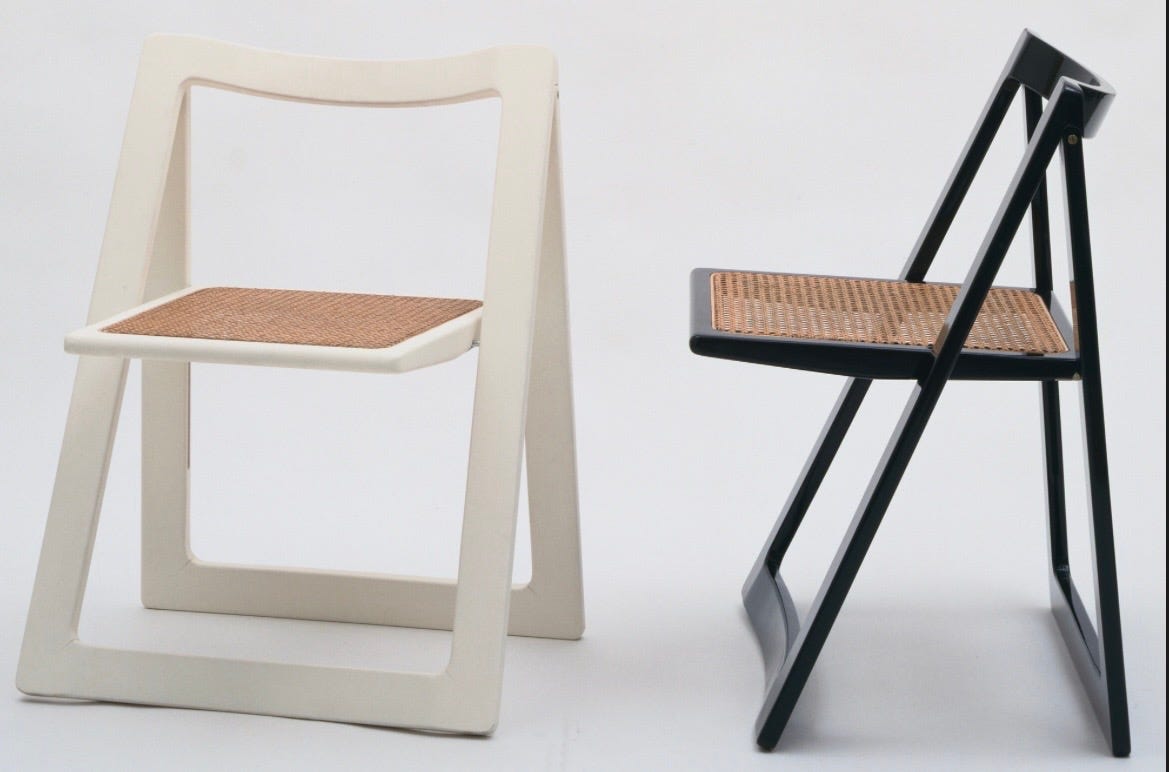
Trieste chair designed by Aldo Jacober, manufactured by Bazzani. 1966.
In June 1969, Casa Vogue introduced three interior designs by Jacober with this note: “Floors that sink as deep as wells, walls that curve over into tunnels, wavy, palpitating ceilings, sinuous spaces, soft furniture: our lifestyle is getting closer and closer to that of Jonah in the belly of the whale.” A marked preference for curved lines is evident in both his interior designs and the individual pieces of furniture he selected for them.
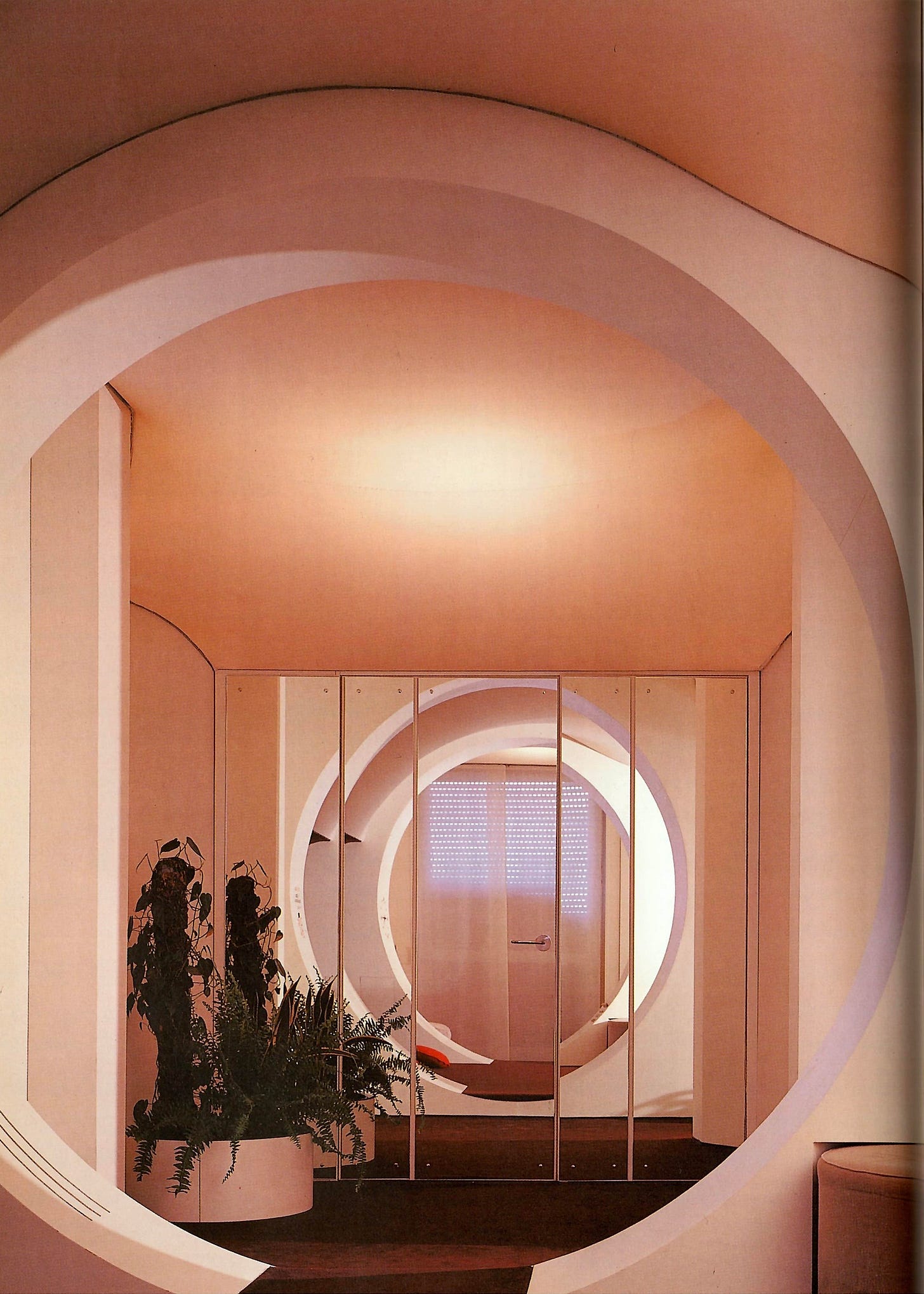
The cylindrical effect of the two arches making the passage from the entrance hall to the living room, and from the living room to the dining room is multiplied by mirrors in the entrance hall.
In collaboration with Fiorella Butti, Giuseppe Pagani, Mariarosa Rizzi, Aldo Jacober decorated this house for a person in the audiovisual field whose professional experience had gotten him hooked on the adaptable atmospheres of discotheques and the Piper clubs. It includes a control booth, similar to a disk jockey’s, for regulating light and sound; the back wall of the living room can be illuminated by eight different colors. The structural surfaces are in motion, wavy, curving: the walls are done in glossy black plastic laminate, and the ceilings are a light fabric stretched over a wooden framework, creating concave and convex spaces lighted from behind.
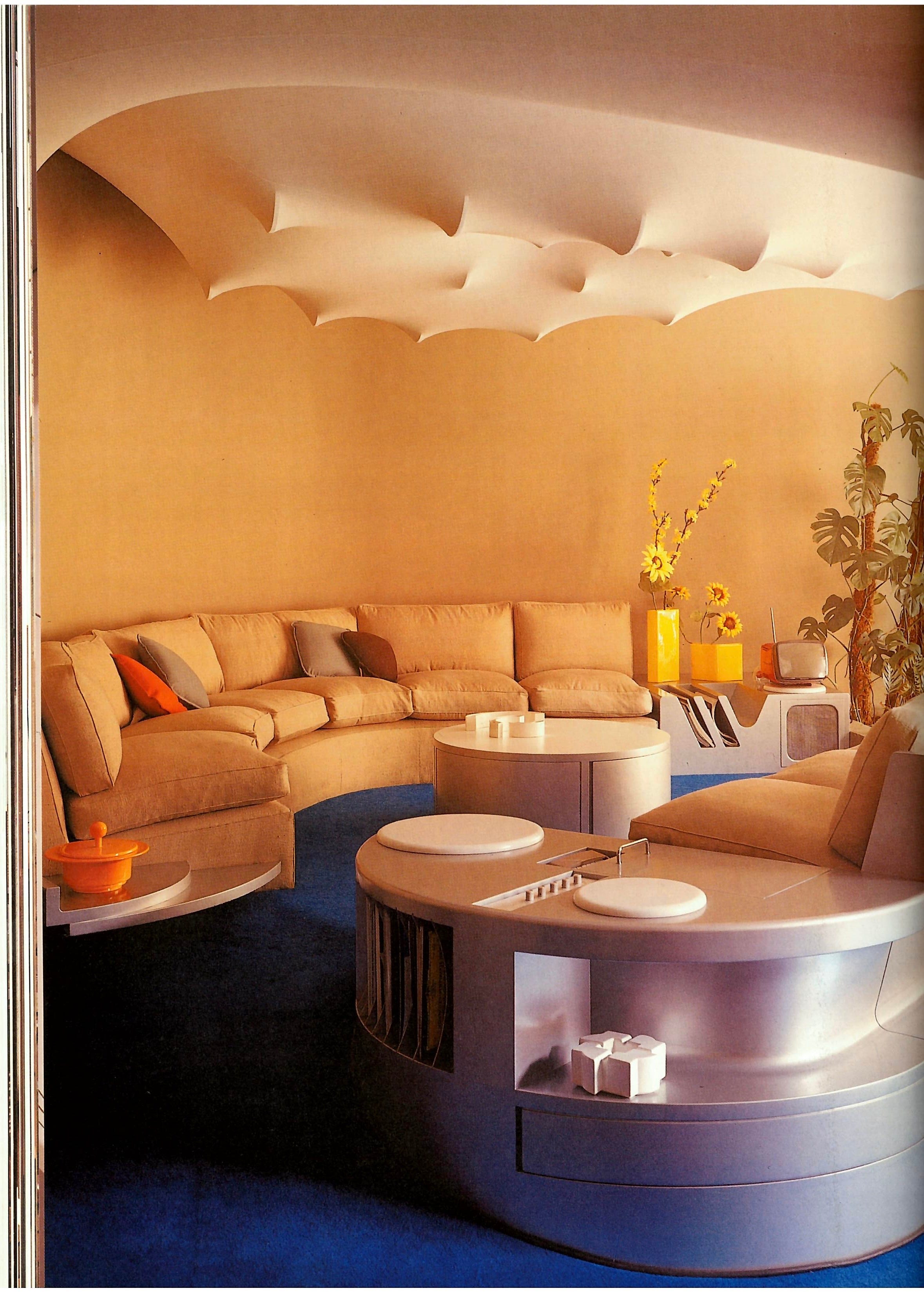
Ceiling with white fabric stretched over a wooden framework that conceals the light fixture and diffuses the light.
Liberal use is made of two kinds of plastics, very popular in the Sixties laminate the walls and methacrylate better known under the trade names perspex, plexiglass, etc. The soundproofing panels of the sound booth are done in methacrylate, with multifaceted decorations that take advantage of the prismatic effects on light typical of this material. Outstanding in the second interior is the curved wall of the dining room featuring one of Lucio Fontana’s “slashes” the only one he ever executed directly on a wall.
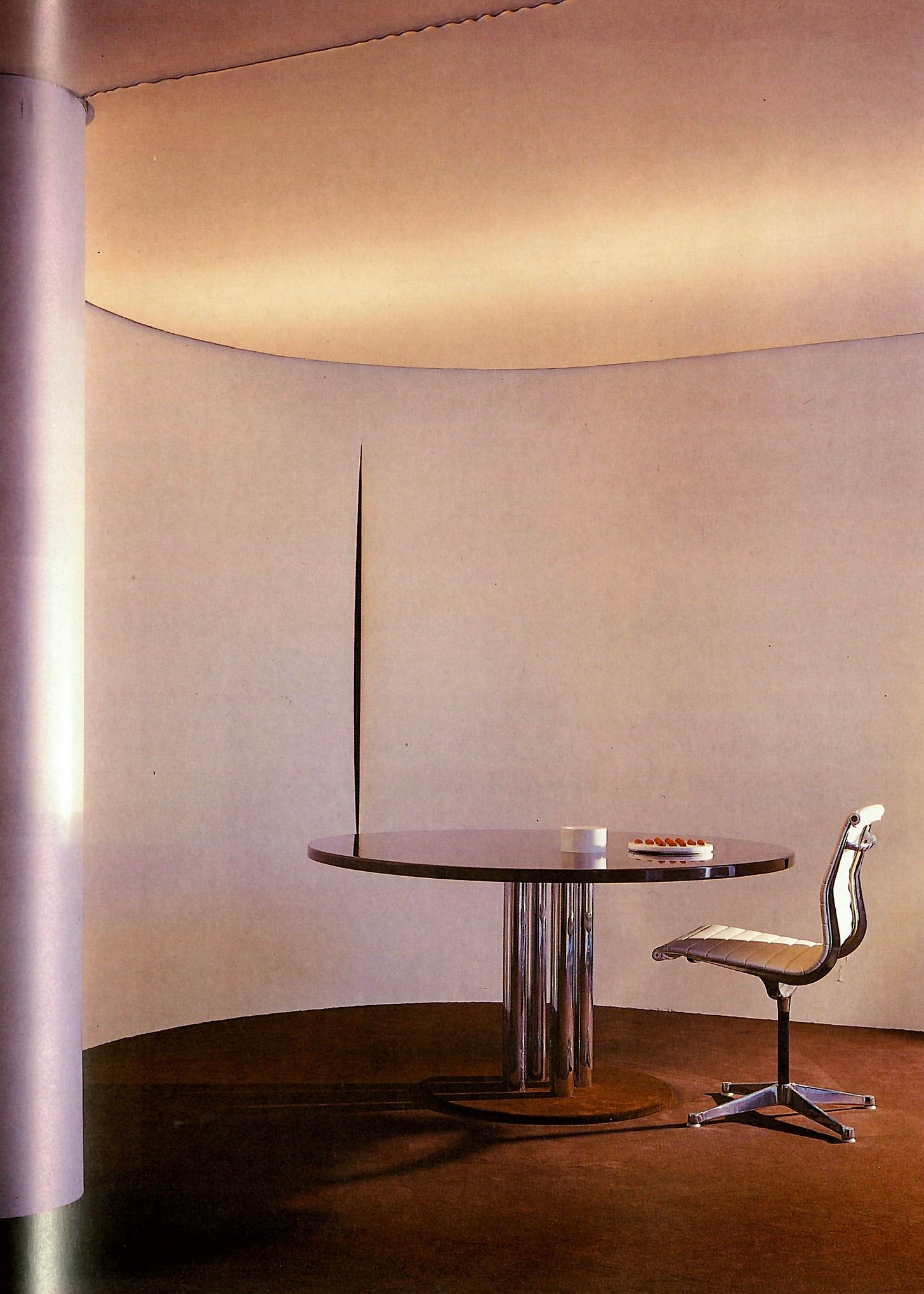
Lucio Fontana “Slash”.
Here, too, liberal use is made of materials and techniques much in vogue at the time: the glossy white enameled walls; the dark brown wall-to-wall carpeting that rides up on the walls to form a homogeneous shell; the glossy black plastic laminate and plexiglass furnishings; the use of furniture as a continuation of the walls and floors, which in turn are treated as furnishings using the same formal idiom. The ceiling is in white fabric that screens the light sources, creating uniform, low-key illumination.
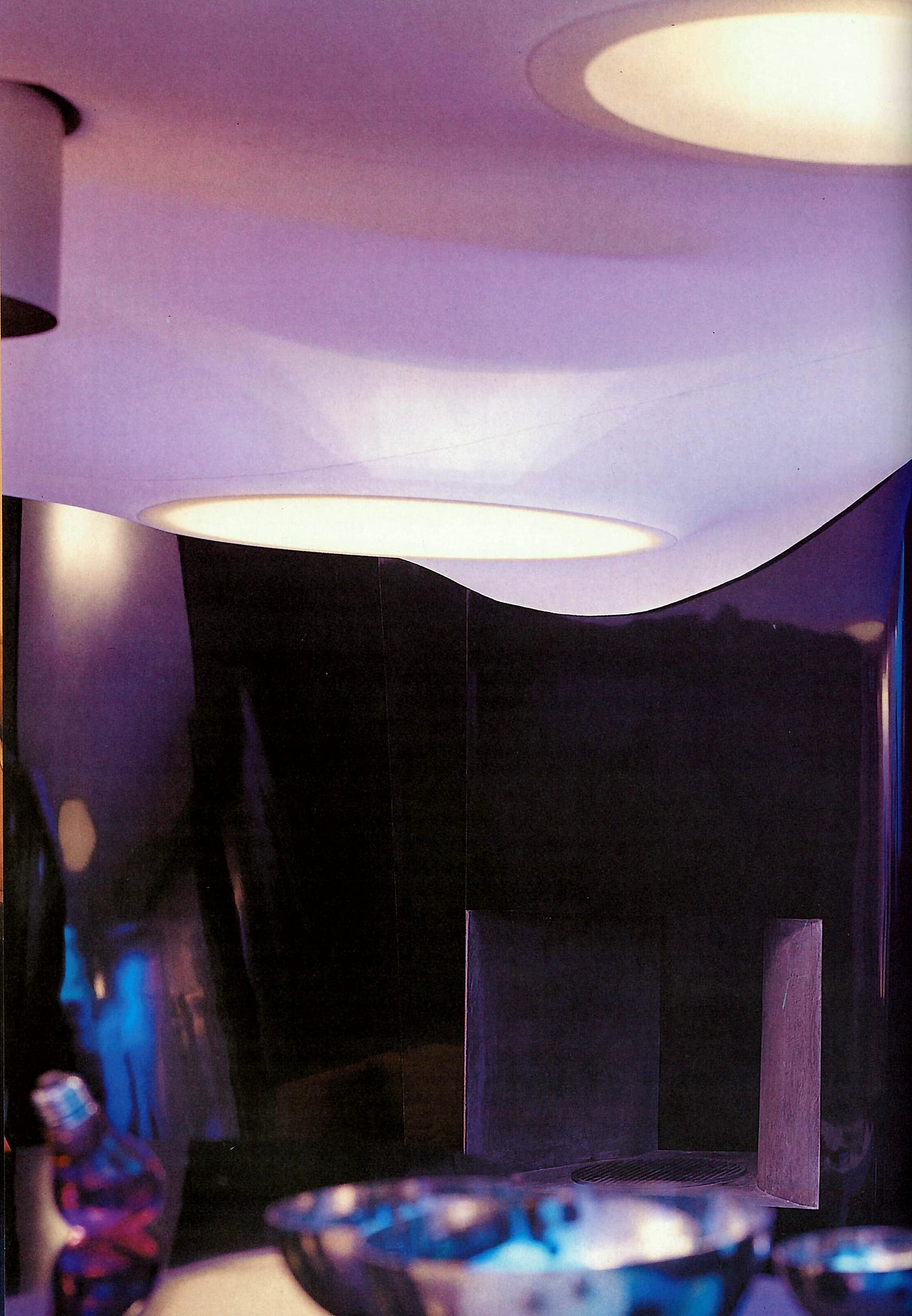
A fireplace that’s shared by the living and dining rooms.
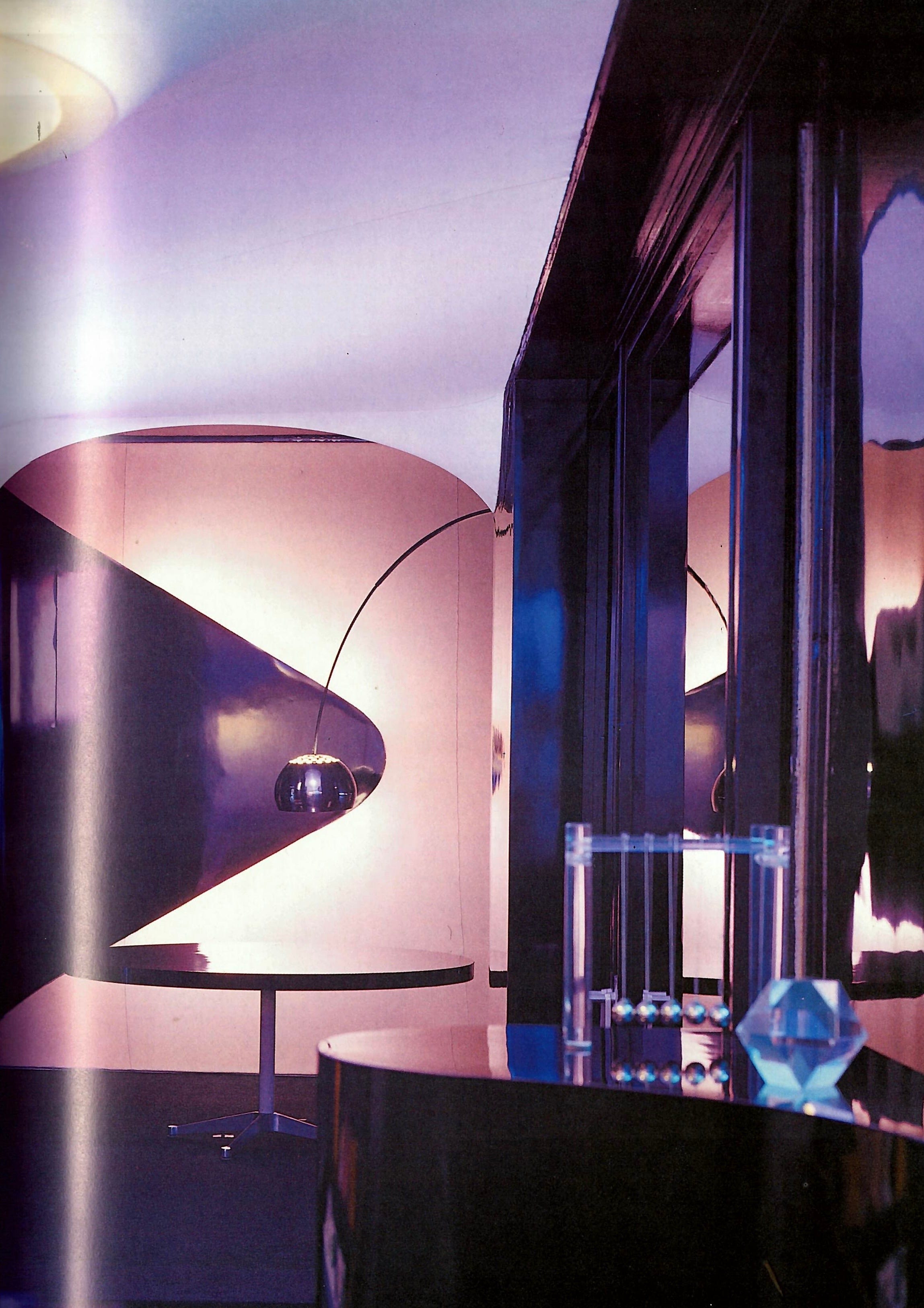
Living room walls are faced with glossy black plastic laminate.