

COMPLETING THE ARCHIVE - BLACK DESIGNERS WHO SHAPE OUR INDUSTRY

There’s a particular kind of violence in being erased from the story of your own work. Not necessarily a dramatic erasure, but an under-the-table, surgical omission.
In practice, that looks like a designer’s name not making it into the caption, the monograph or the exhibition catalogue. This is the story of many Black designers in America: not absent from the work itself, but systematically removed from its authorship.
THE ARCHITECTURE OF EXCLUSION
Like most industries in the 20th century, interior design and architecture were dominated by white men. Women and people of colour often existed at the margins, working as associates in design offices where their creativity went uncredited. Their contributions were frequently absorbed into the mythology of the singular (white, male) “genius”.
But the exclusion went deeper than office politics, as it was deeply systemic and structural. Black designers faced barriers at every stage of building a career. Many architecture and design schools limited or discouraged their enrollment. Professional firms refused to hire people of colour. Clients doubted their authority. Licensing boards and professional organizations were slow to admit Black industry leaders, if at all. Advancement often meant doing the work without the title, the credit or the pay.
For many, survival in the field required overqualification, emotional labor and constant performance of legitimacy.
And still, Black architects and designers persisted. They built parallel pathways and wove their history, identity and lived experience into the spaces they created.
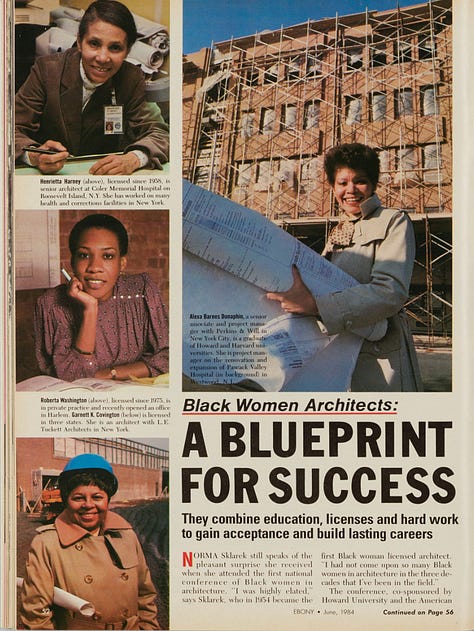
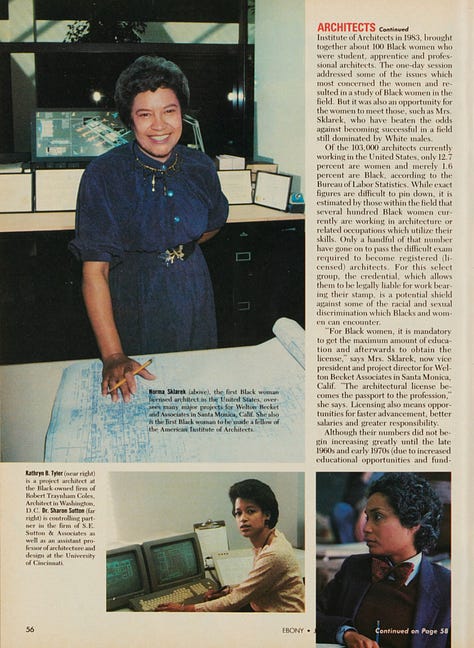
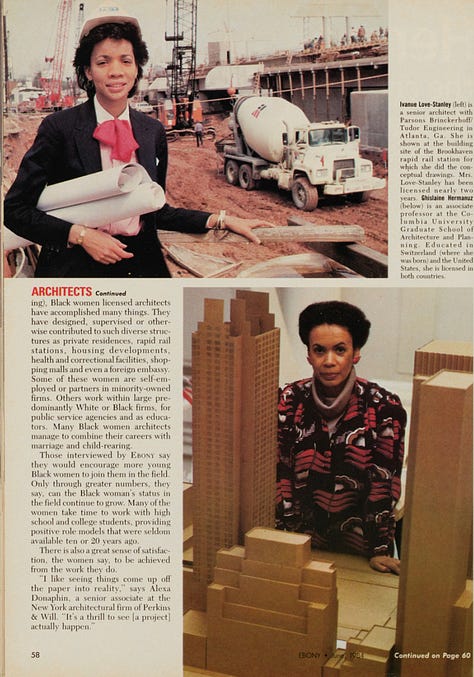
June 1984 Issue, Ebony Magazine via Smithsonian Institution Norma Merrick Sklarek Archival Collection
PIONEERS OF THE PAST
Work you may know, but names you may not. These are some of the Black designers who have largely contributed to the modernist movement.
Paul R. Williams, (1894-1980)
As one of the most prolific architects of the 20th century, Paul R. Williams helped define the elegance of California modernism. Often called “the architect to the stars,” he designed homes for clients including Frank Sinatra, Lucille Ball, Barbara Stanwyck, and many more. Working in a segregated society, Williams famously learned to draw upside down so he could sit across from white clients who might not sit beside him.
Central to Williams’ design philosophy was the idea of creating homes, not just houses. His work evolved, moving fluidly between Spanish Mediterranean influences of early California architecture, as well as Georgian, Tudor, Colonial and Hollywood Regency styles. Because he didn’t confine himself to a single, easily identifiable aesthetic, some critics dismissed him as less “serious.” But for Williams, versatility was the point. He believed his true value as an architect lay in his ability to listen closely and translate his clients’ lives, aspirations and emotional needs into built form.
The homes Williams designed were impeccable. His opulent, grand foyers often became the focal point.
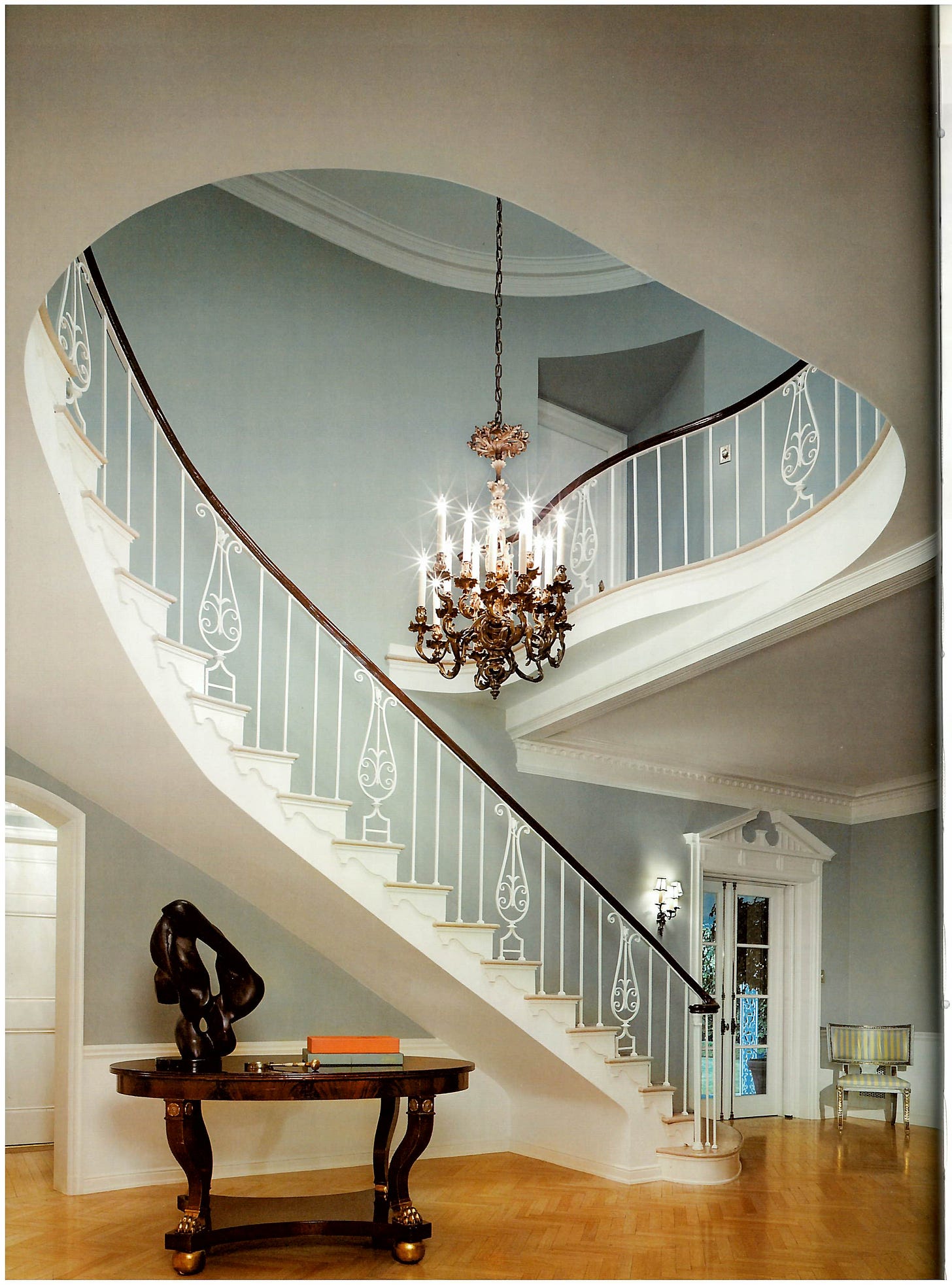
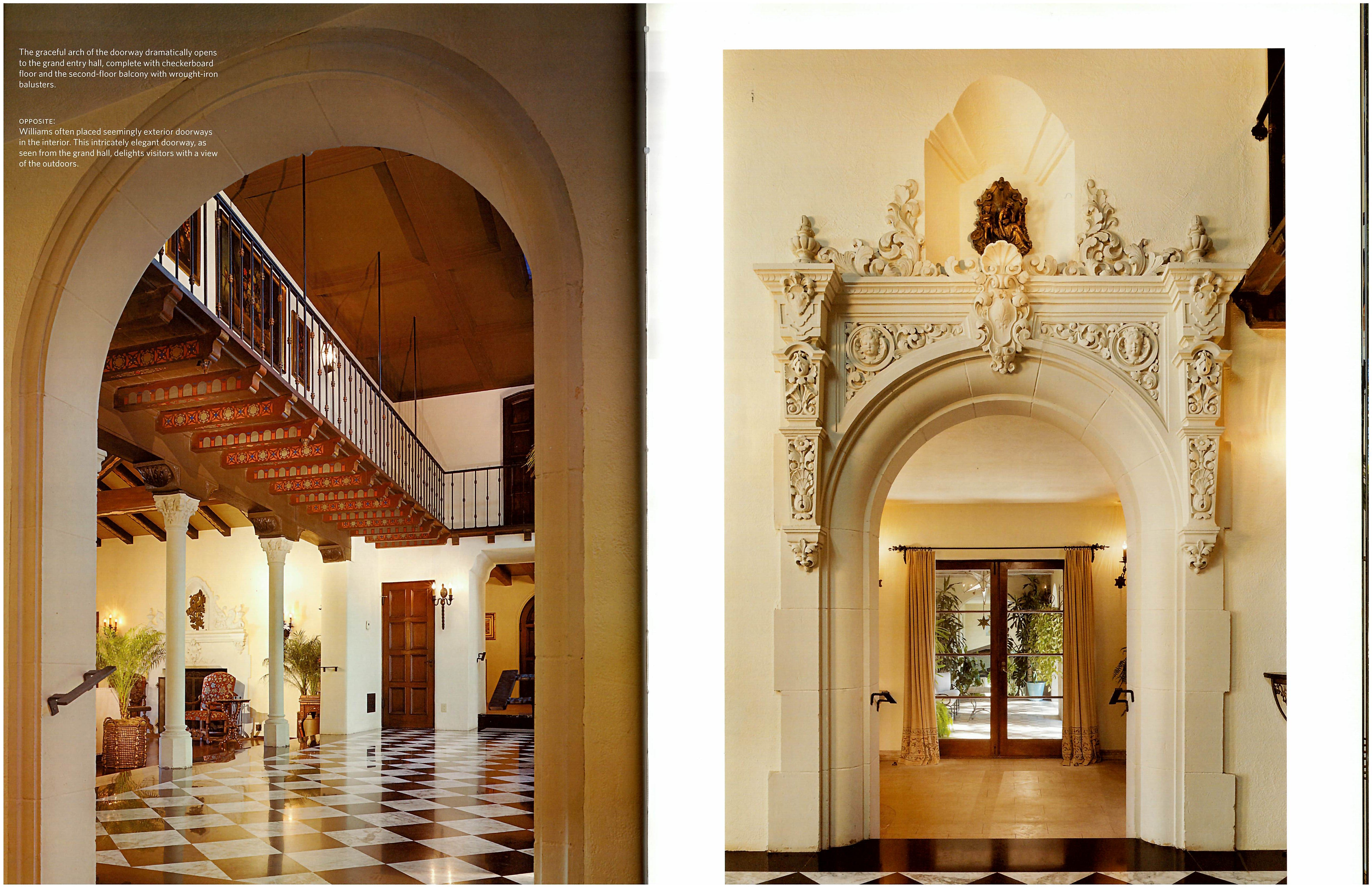
Degnan Residence, La Cañada Flintridge, 1927 (Classic Hollywood Style, Rizzioli)
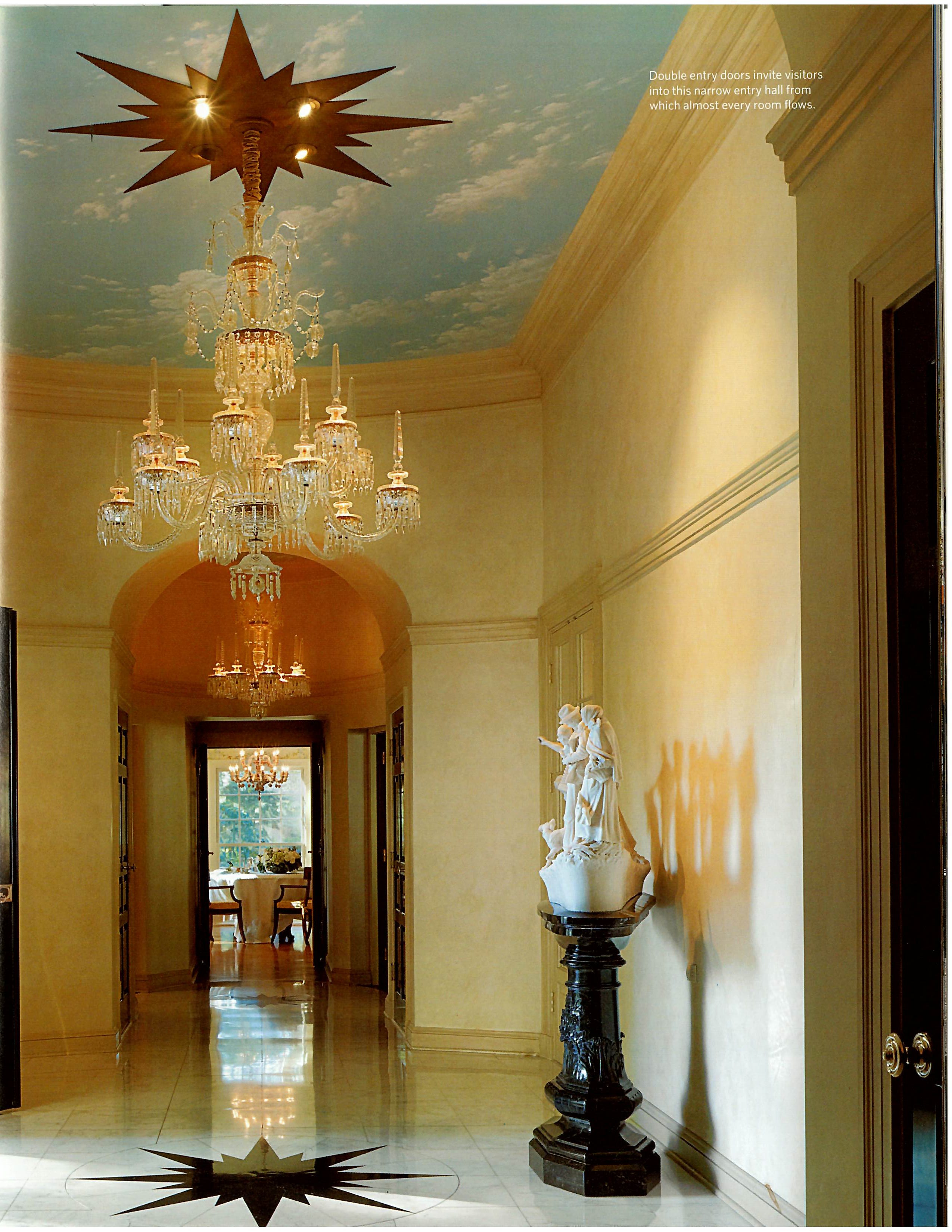
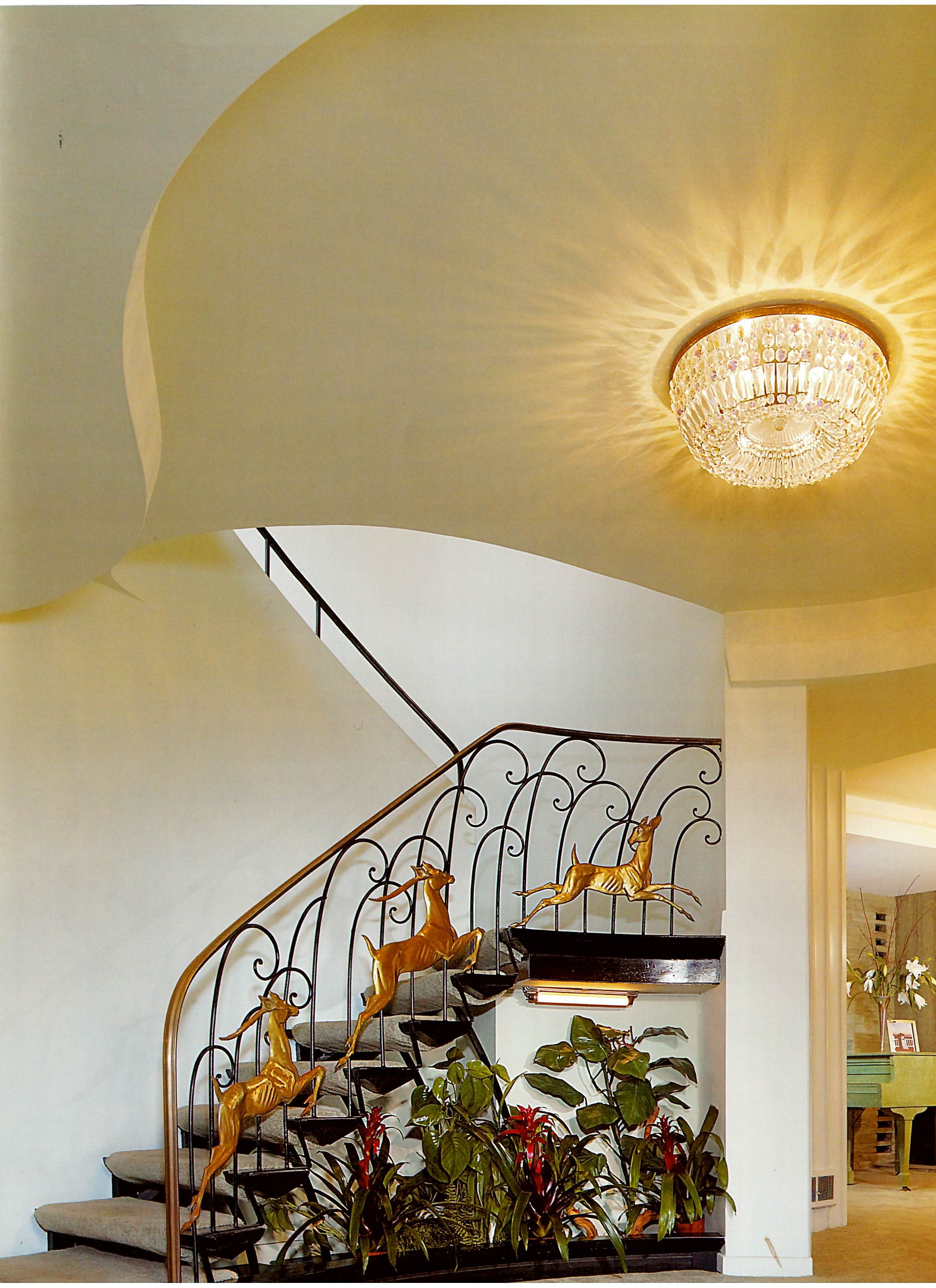
Landis residence, Beverly Hills, 1955 2. Williams Residence, Los Angeles, 1951 (Classic Hollywood Style, Rizzioli)
Norma Merrick Sklarek, (1926-2012)
Norma Merrick Sklarek was a trailblazer at every stage of her career. She was the first Black woman to earn an architecture degree from Columbia University. After graduation, she was rejected by 19 employers before finding work. Eventually, Sklarek rose through the ranks in Los Angeles and later co-founded Siegel, Sklarek, and Diamond. This was one of the largest women-owned architecture firms in the United States at the time.
Sklarek’s architectural approach aligned with late modernism, characterized by high-tech glass façades, industrial materials and a strong emphasis on large-scale commercial functionality. Sklarek oversaw major projects, including the U.S. Embassy in Tokyo, LAX Terminal 1, the Pacific Design Center, and many other prolific landmarks of this time.
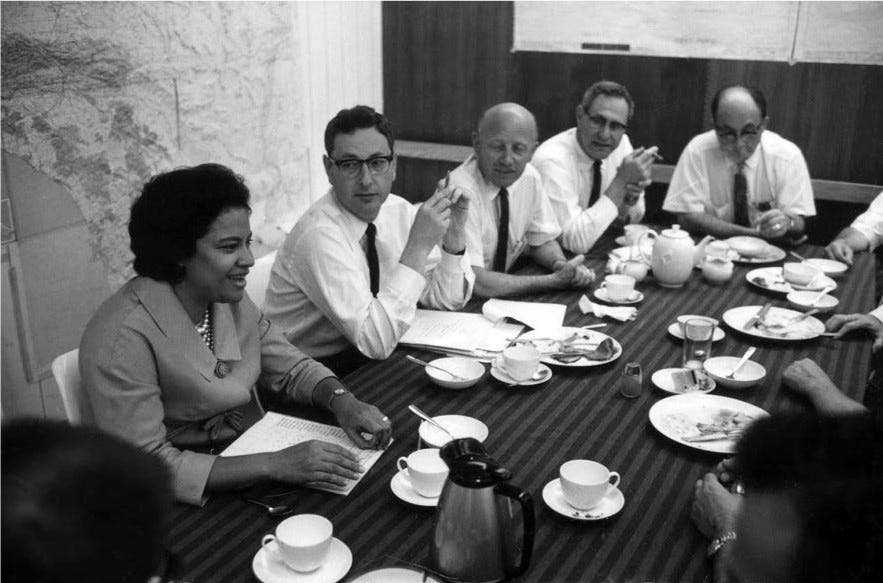
Sklarek at a Gruen and Associates meeting, circa 1960 (Gruen Associates)
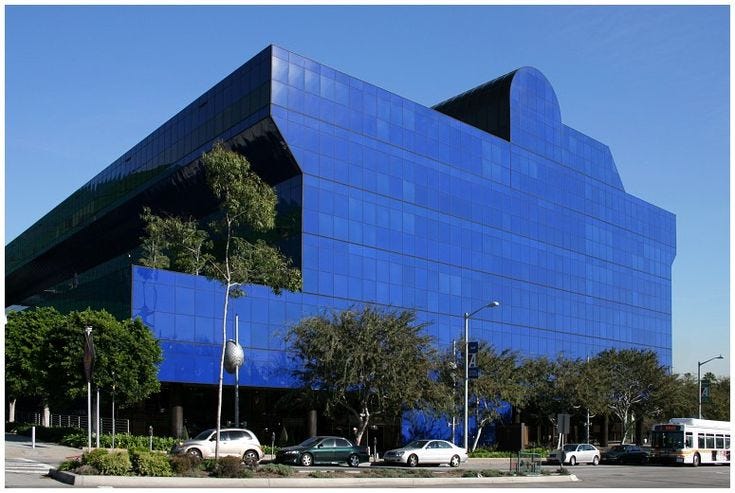
“The Blue Whale” Pacific Design Center (source unknown)
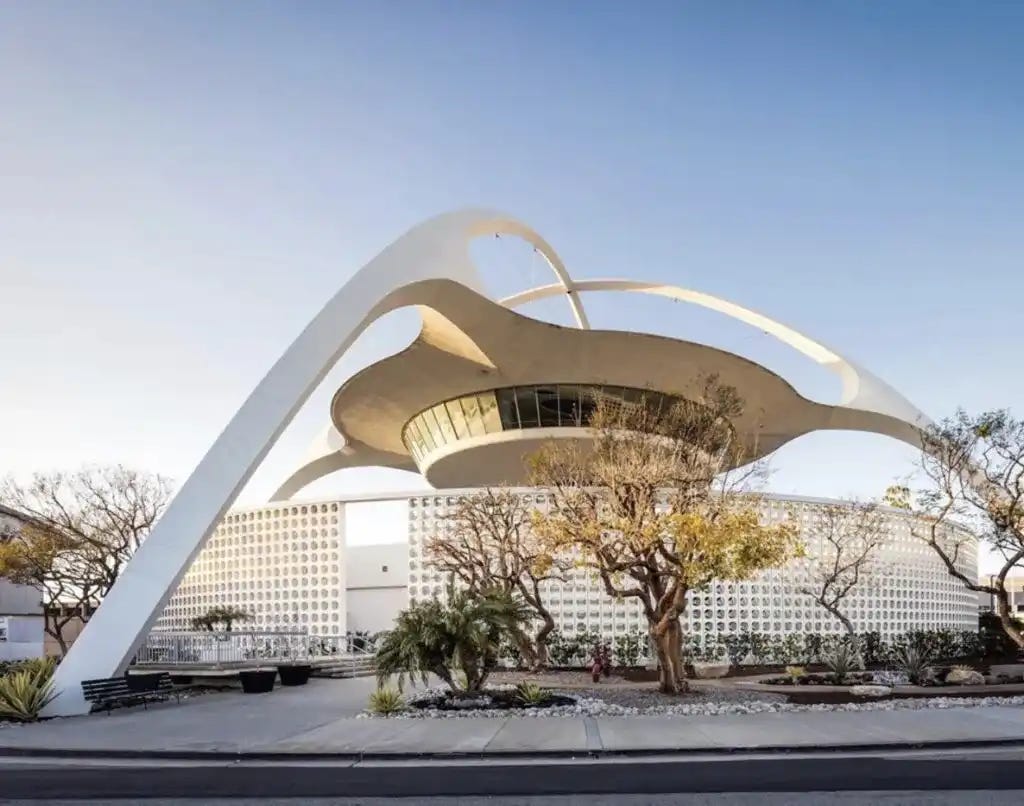
Terminal One at Los Angeles International Airport (LAX) photo from Architectural Photography Almanac
Amaza Lee Merdedith, (1895-1984)
A designer who leveraged Modernism as a tool for cultural autonomy during segregation. She was one of the first Black female architects in the United States and a vital figure in expanding who modern design could serve. Amaza was also an educator and institution builder, founding the art department at Virginia State University.
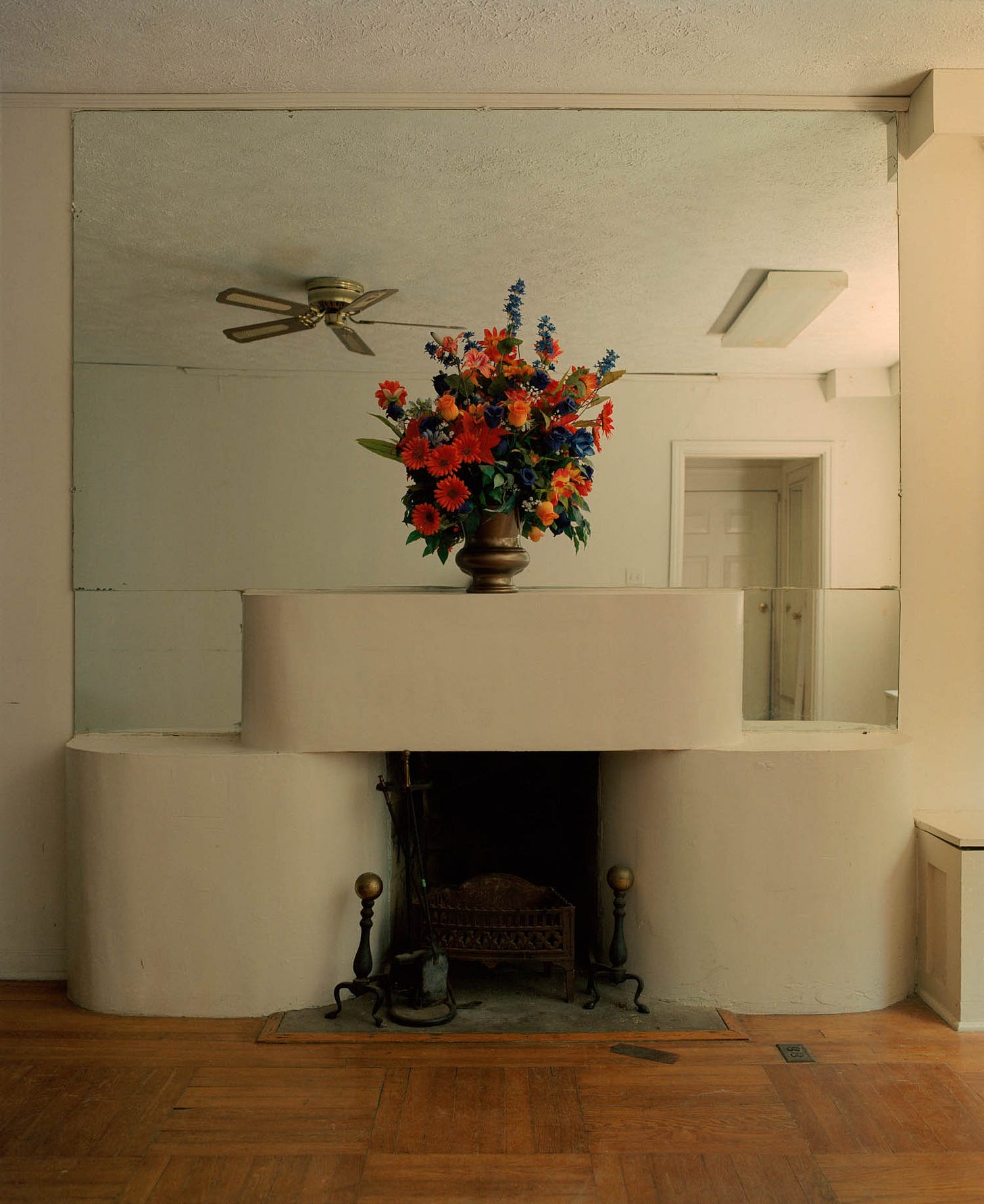
Meredith’s approach to modernism adapted to the social realities of Black life in the 20th century. She co-developed ‘Azurest North’, a beachfront vacation community offering middle-class Black families dignified leisure space during segregation. ‘Azurest South’ (now the VSU Alumni House) was another significant property she designed, functioning as a radical design manifesto and a private sanctuary for her and her partner. Her work replaced traditional ornamentation with the “International Style”, characterized by flat roofs, geometric forms, and “Azurest Blue” accents.
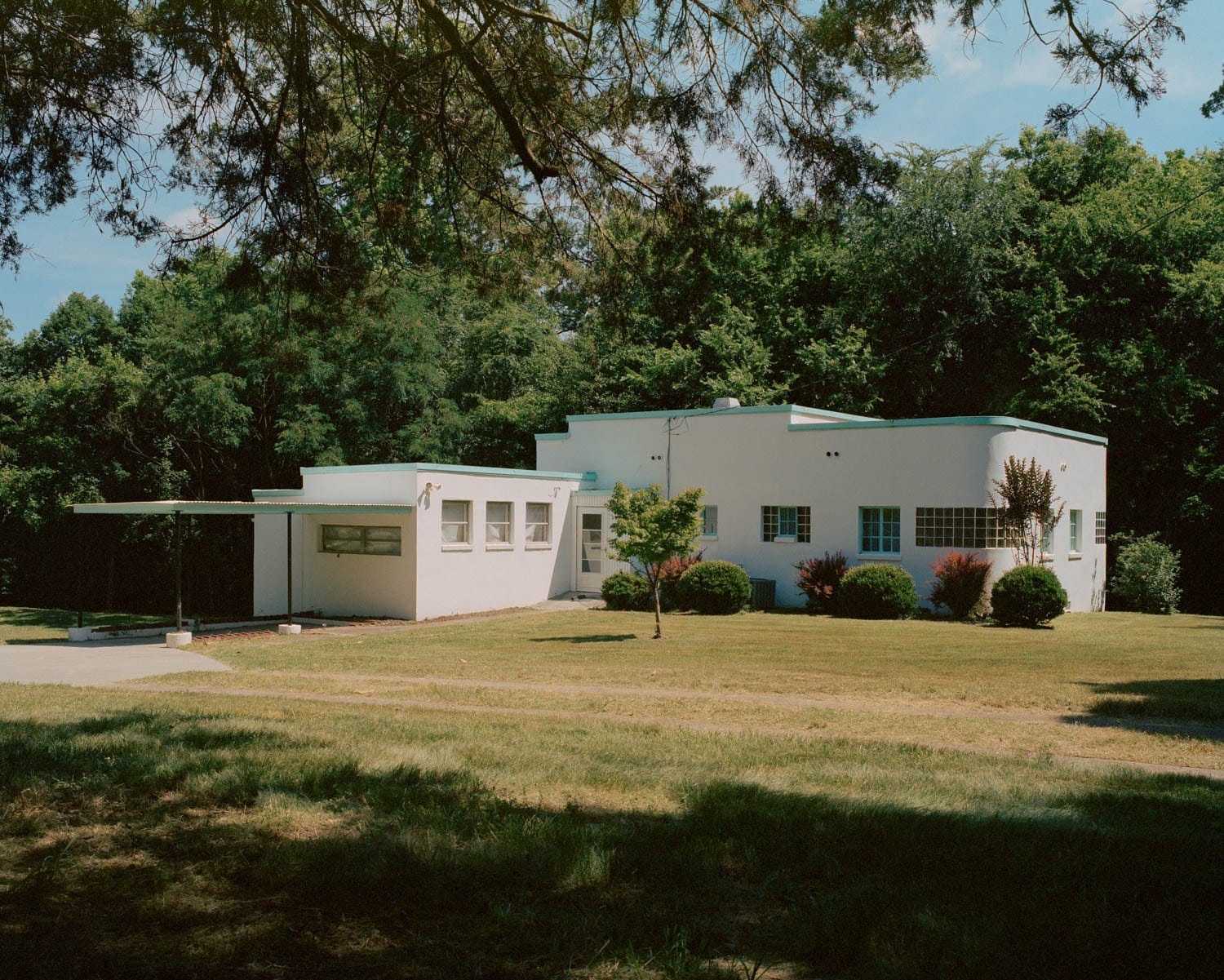
‘Azurest South’ designed by Amaza Lee Meredith, built in 1934. Photograph via interiordesign.net
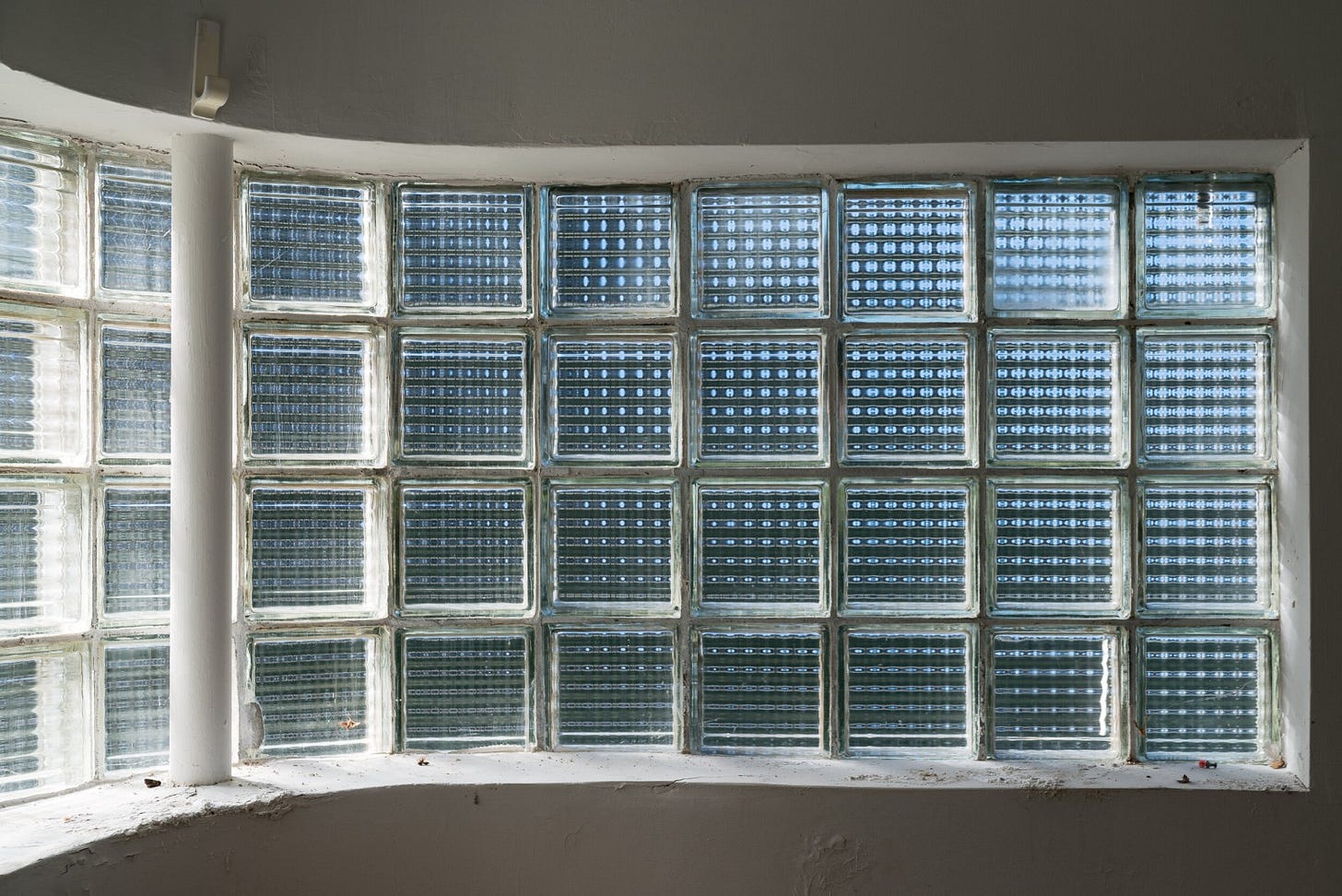
‘Azurist South’ via do_co,mo.mo_u
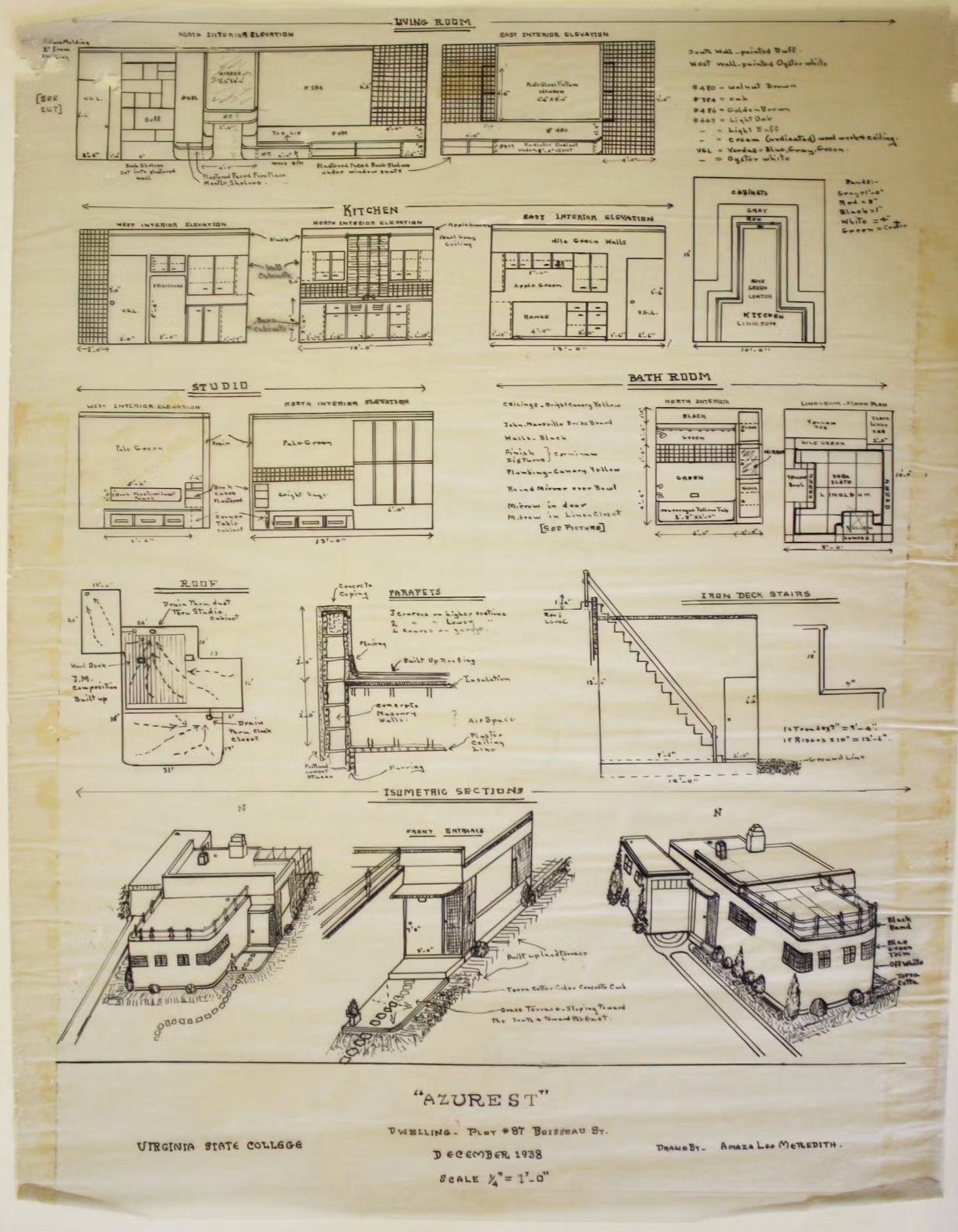
Screenshot of a December 1938 construction drawing for Azurest South by Amaza Lee Meredith via Virginia State University Special Collections and Archives
PIONEERS OF THE PRESENT
History laid the groundwork; today’s designers are expanding the field in real time. Here are three industry leaders who are carrying these legacies forward in bold and distinctive ways.
Sheila Bridges
Originally from Philadelphia, Sheila Bridges founded her firm in Harlem in 1994 to align her practice with the neighbourhood’s legacy of Black creative excellence. She is the creator of the iconic Harlem Toile de Jouy (2006), a reinterpretation of 18th-century French pastoral motifs that replaces Eurocentric imagery with joyful, satirical scenes of Black life.
Bridges has designed high-profile spaces ranging from Bill Clinton’s Harlem offices to the official residence of Vice President Kamala Harris. Today, her work is preserved in the permanent collections of the Smithsonian Cooper Hewitt, the Brooklyn Museum, and the Victoria and Albert Museum.
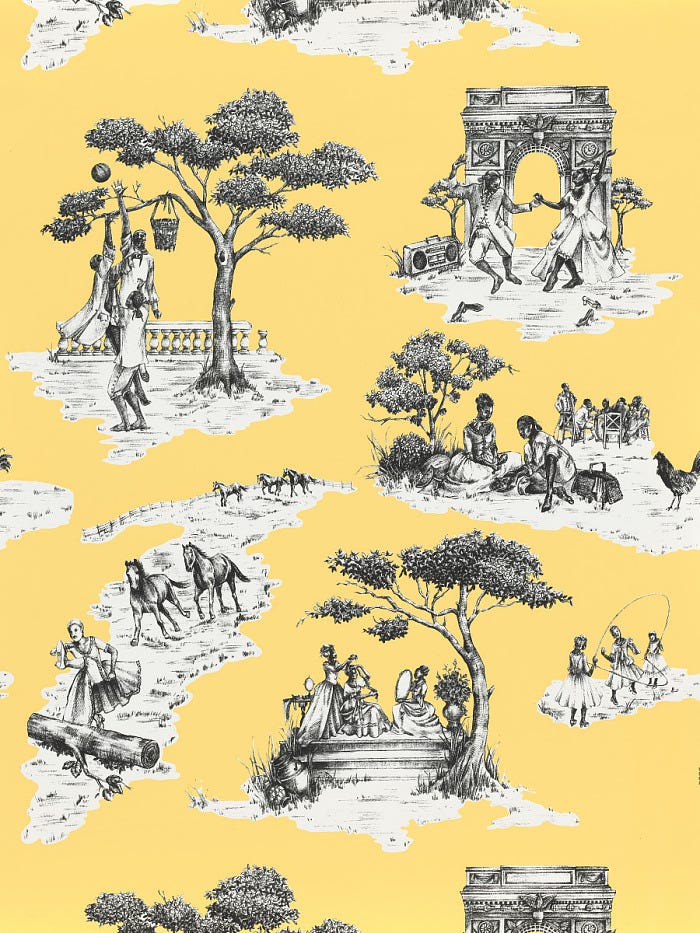
Harlem Toile de Jouy by Sheila Bridges, National Museum of African American History and Culture
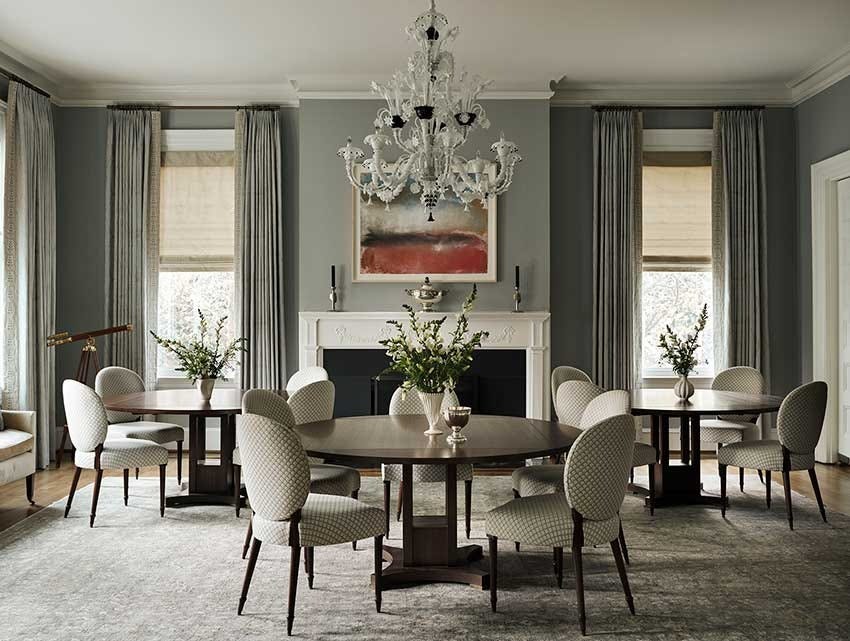
One Observatory Circle – The Vice President’s Residence redesigned by Sheila Bridges (2022)
Mariam Issoufou Kamara
Mariam Issoufou Kamara’s work reflects the cultural vibrancy of her firm’s birthplace in West Africa. Her focus comes from a place of care for the community, which translates into projects that hold more than just a beautiful facade. Her firm is also mindful of using resources that are both local to the project and sustainable.
Issoufou has taught a series of lectures hosted by MIT, Columbia University GSAPP, the African Futures Institute in Ghana, and Harvard GSD, highlighting the inaccuracies of information on African design history taught in Western schools compared to her own experience growing up in Niamey, Niger.
In her own experience, she realized how little was taught about design and building practices outside of Europe and North America. Her goal in educating the next generation of architecture students is to de-center Western ideals in design.
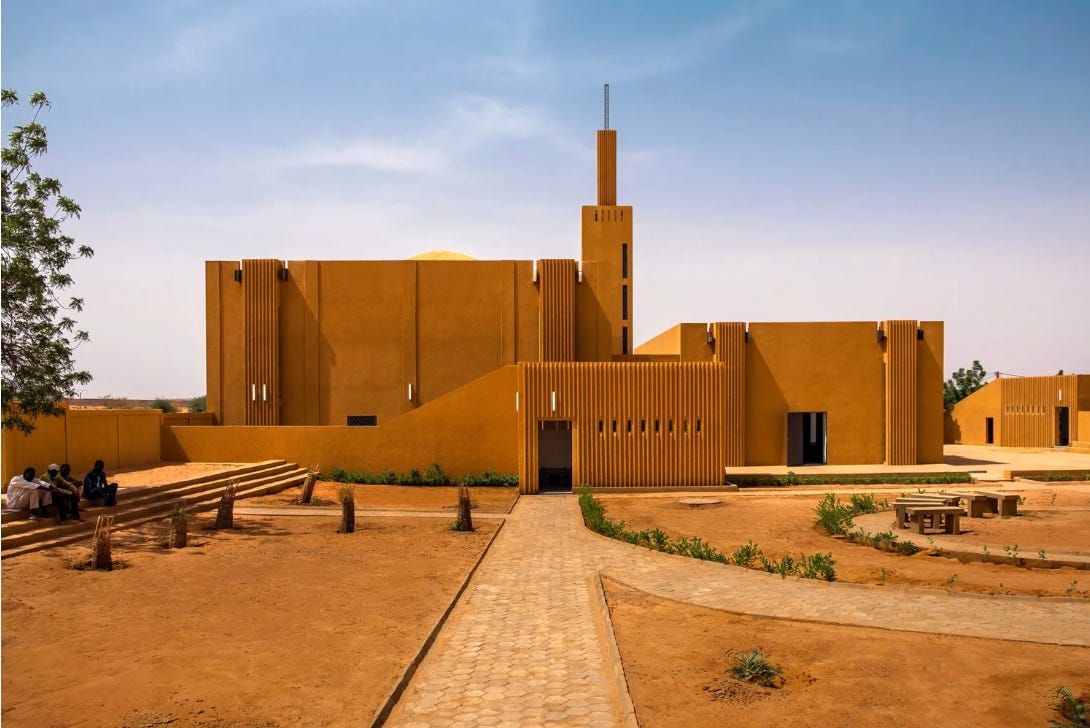
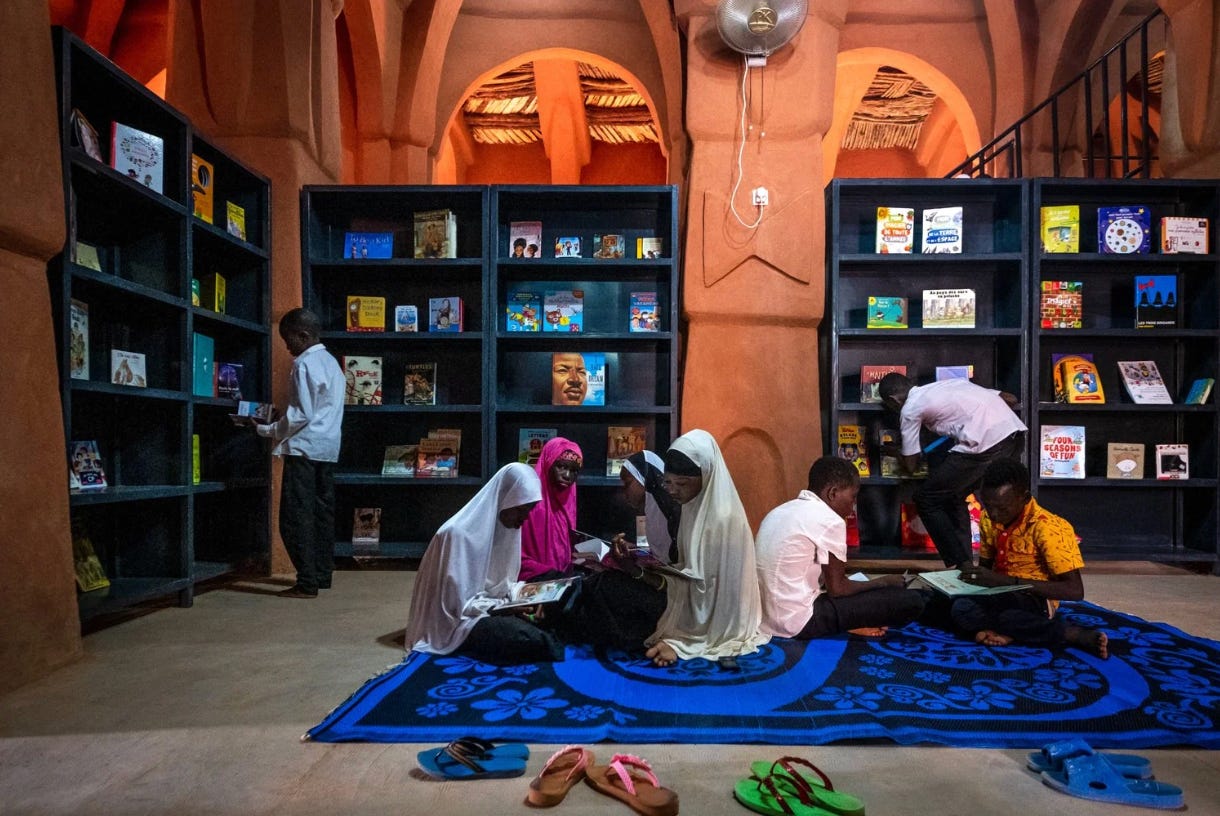
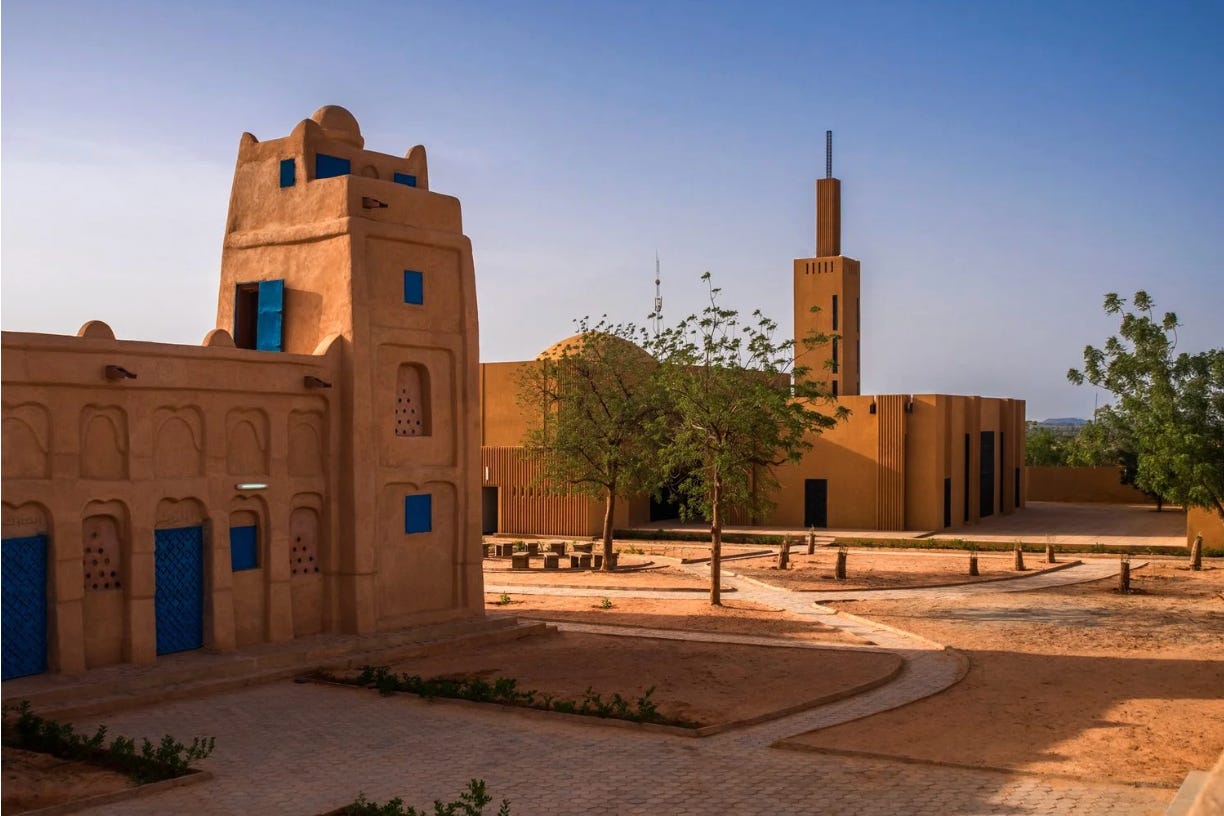
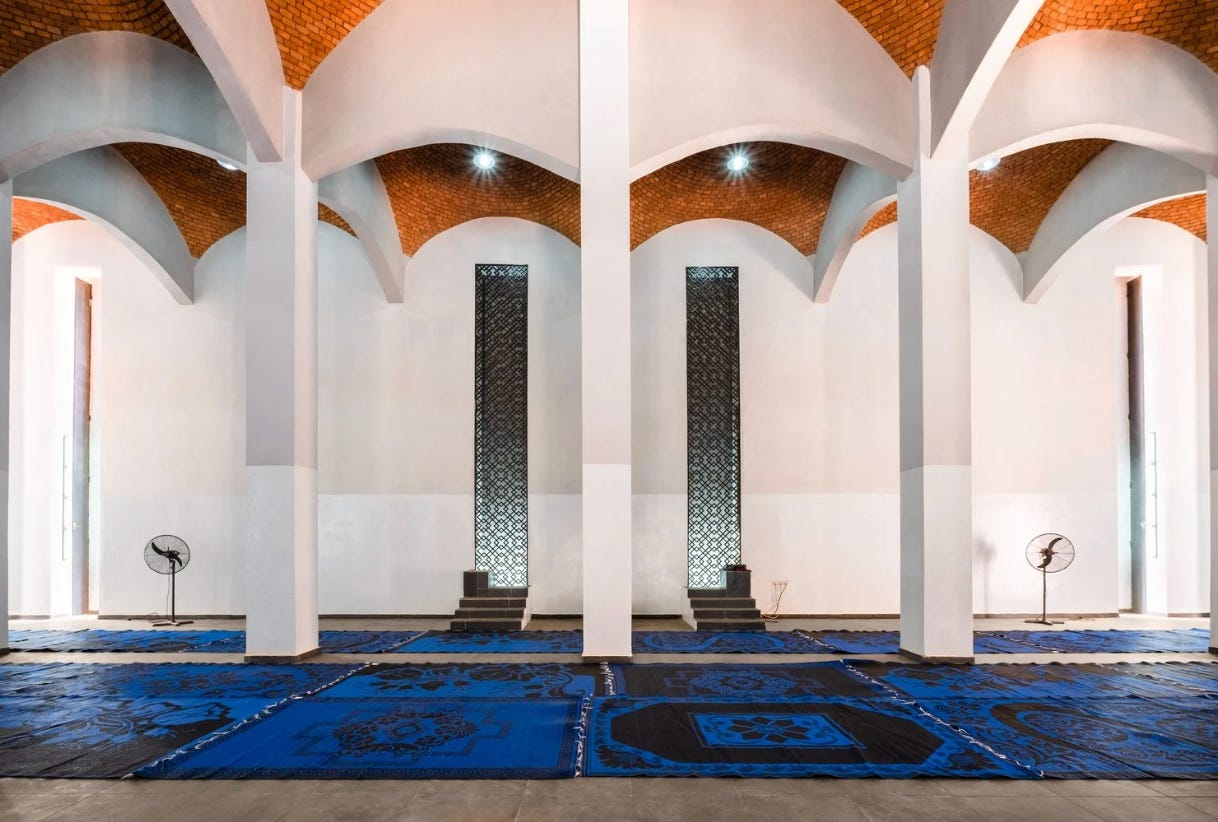
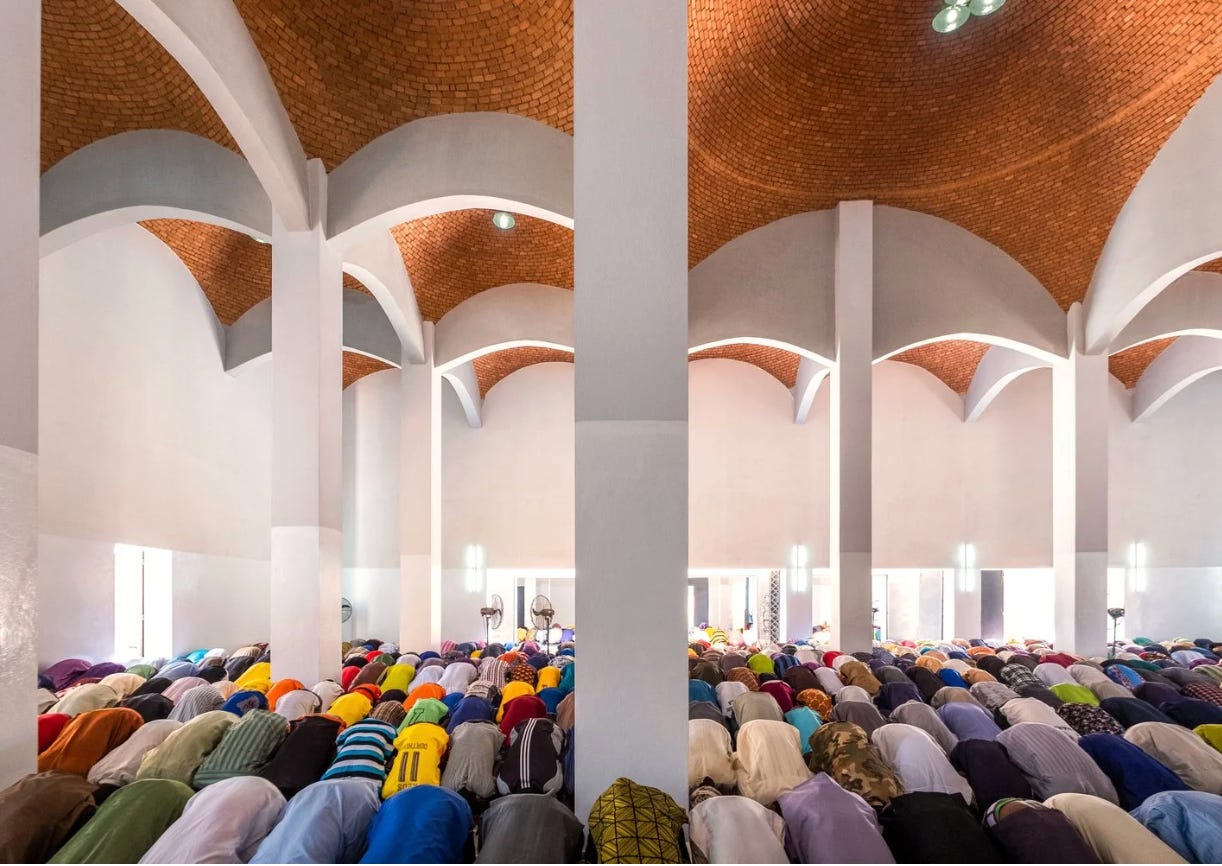
Hikma Community Comlex, Niger 2018. Via: www.mariamissoufou.com
Kimberly Dowdell
She’s a leader, but more acutely described as a Powerhouse. Dowdell made history in 2024 as the first Black woman and first millennial to serve as President of the American Institute of Architects (AIA), proving that the future of the industry has officially arrived. Her work is rooted in what she describes as architectural activism, the belief that design is a tool for social equity, community empowerment and long-term systemic change.
Dowdell’s portfolio reflects that range of impact. It spans projects at a monumental global scale, including Hamad International Airport in Qatar and the modernization of LAX, while also extending to deeply local, community-driven work.
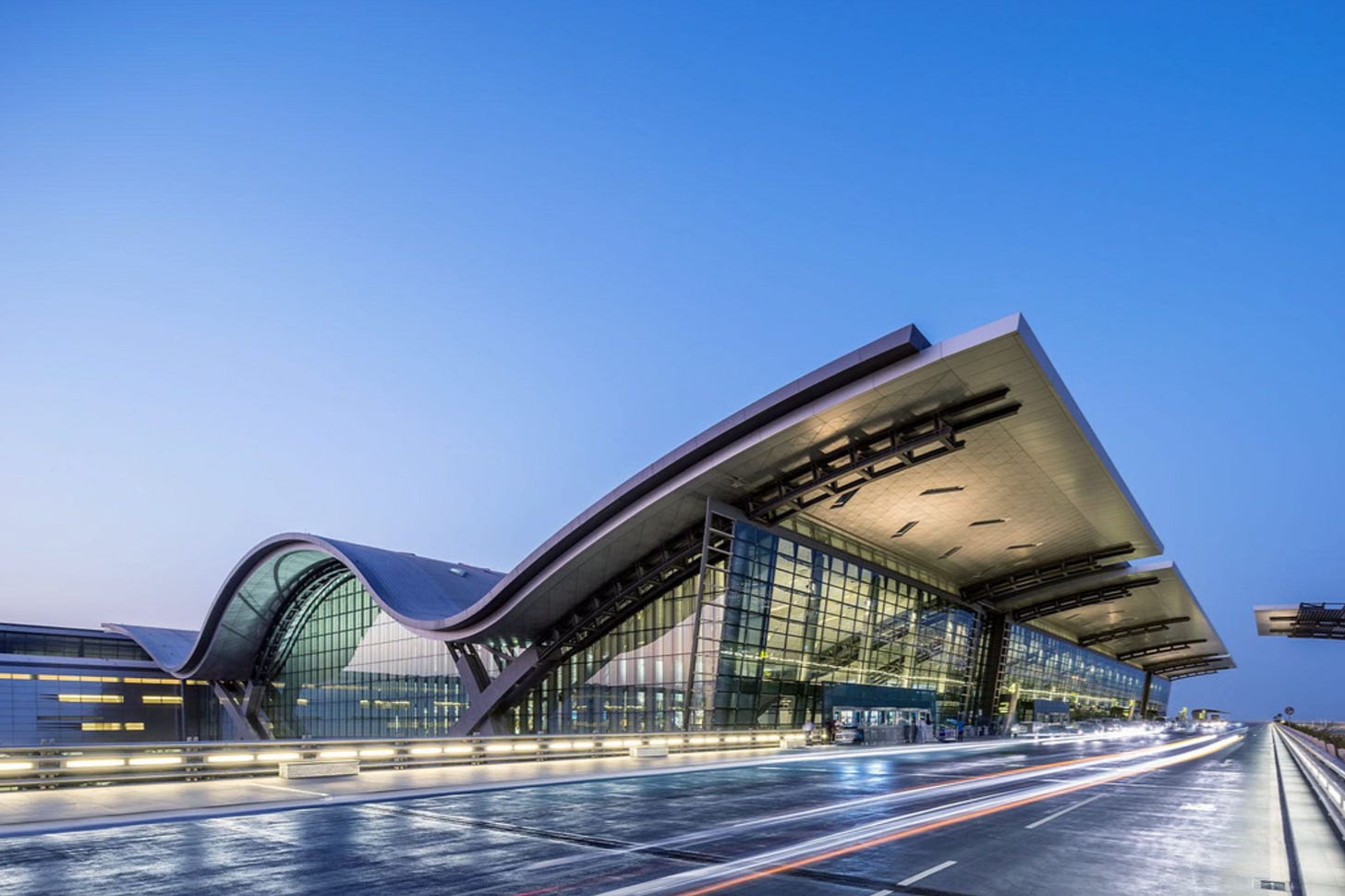
Hamad International Airport Passenger Terminal Complex, the first project by Kimberly Dowdell at HOK, 2008.
RECOVERY AS AN ACTIVE PRACTICE
Spending time with these stories is crucial. The design industry pulls so much inspiration from the modernist period. While remembering the innovation, we can’t forget the painful realities faced by so many.
These designers faced societal barriers at every turn, yet continued to imagine, build and push forward in pursuit of their own point of view.
Recovery work is happening in real time: museums are revisiting records, archives are digitizing overlooked collections, and design curricula are expanding. This kind of work benefits everyone. A fuller understanding of history strengthens practice. It gives us more reference points, a broader visual vocabulary and more resources to reflect on when solving contemporary problems.
Elevating marginalized voices, supporting black-owned businesses and recognizing overlooked contributions isn’t just “cultural” work - it’s design work too.