

USM BEFORE USM

Volume 3: Print over Pinterest. A series where I find what is not yet on the internet, and prove that the best inspiration is always found in print.
If you aren’t familiar with Carla De Benedetti’s photography, I highly suggest you become familiar. Her work serves as a visual history lesson of the greatest spaces designed in the modernist period in Italy. Sifting through a book she photographed, Italian Living Design, by Giuseppe Raimondi, I came across this interior by Claudio Dini.
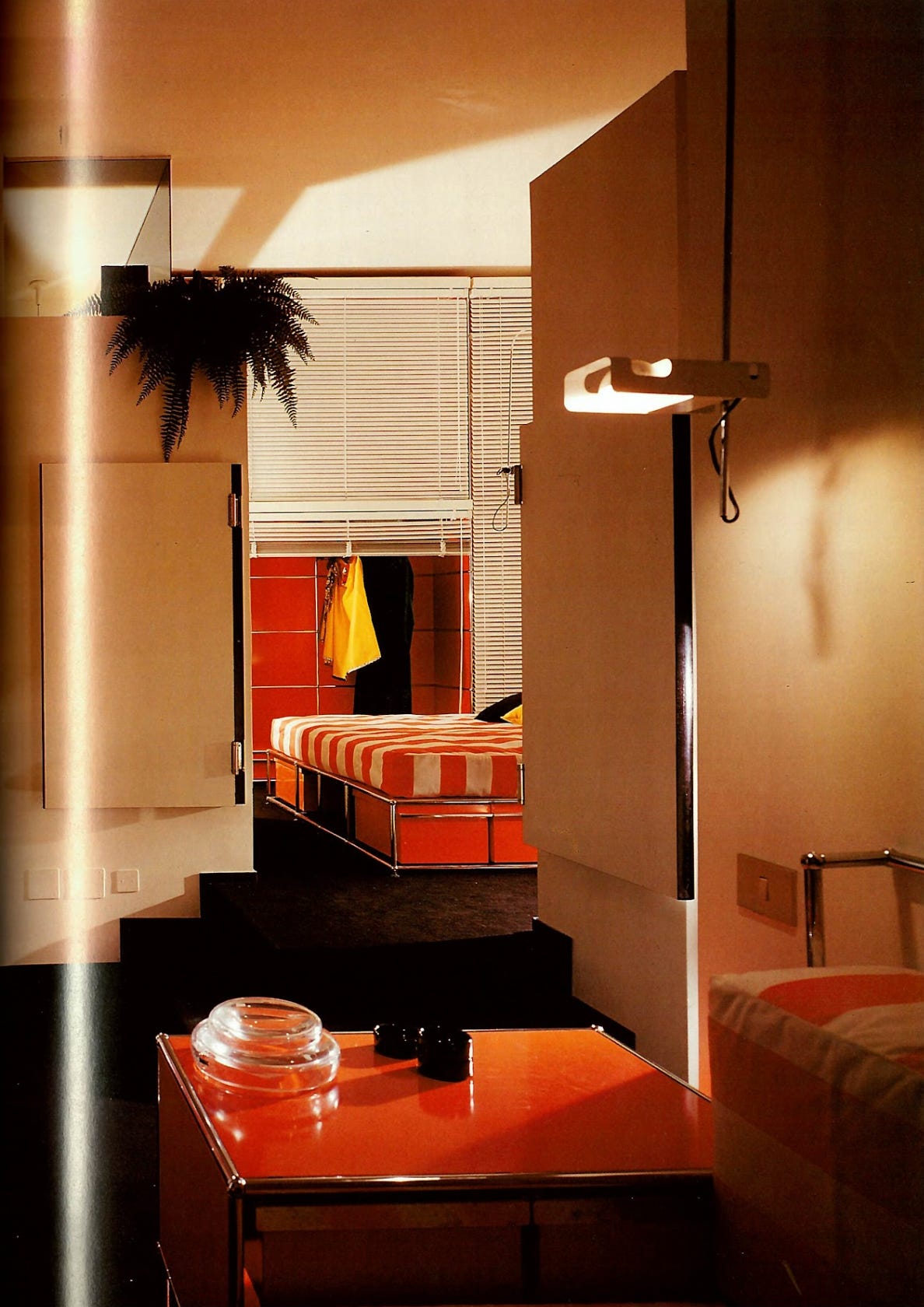
Interior for model apartments Dini designed in 1973 for Edilnord, an Italian real estate developer.
The furniture included was considered not as “accessories” but as basic elements of the plan: the wall partitions provided closet space; the dining table was designed as an element both separating and linking the kitchen area with the living room; the baths were separated into “functional areas,” permitting their contemporary use. The choice of materials ranged from plastic laminate to the most valuable types of wood.
In the case presented here, in anticipation of high-tech fashion, a system of metal nodes and chrome tubes (the USM Haller model).
This confused me, because as far as I knew, USM was founded in the 80’s. So, naturally, I needed to deep dive into the story of USM.
I had to pick up another book for this rabbit hole, and found this incredible read that helped to dissect the USM history: Rethinking the Modular, by Burkhard Meltzer.
USM was actually founded in 1885 as an ironmongery and metalworking company. USM takes its initials from its founder, Ulrich Schärer, and Münsingen, the Swiss village just outside of Bern, where he was born.
Before furniture, USM Haller began as a family-owned metal factory. It was Paul Schärer Jr., grandson of the founder, who steered USM into the modern world in the early 1960s.
In 1961, Paul Schärer Jr. hired his favourite designer, Fritz Haller, to create an innovative, modernist new space for the business. They needed a space that could house both the administrative offices and the manufacturing operations. The result was a large open cubist space.


Imagery from “Rethinking the Modular” of the 1960’s production facility and office in Münsingen.
Schärer and Haller couldn’t find furniture that was modular and adaptable enough to suit the needs of the large open space. They developed what would become known as the Haller system. Furniture that would be easy to adapt and expand, using their patented ball joint that stably connects each piece of the furniture with minimal visible joinery.


Images of the USM office interior, and the office welcome desk with the first edition of USM systems.
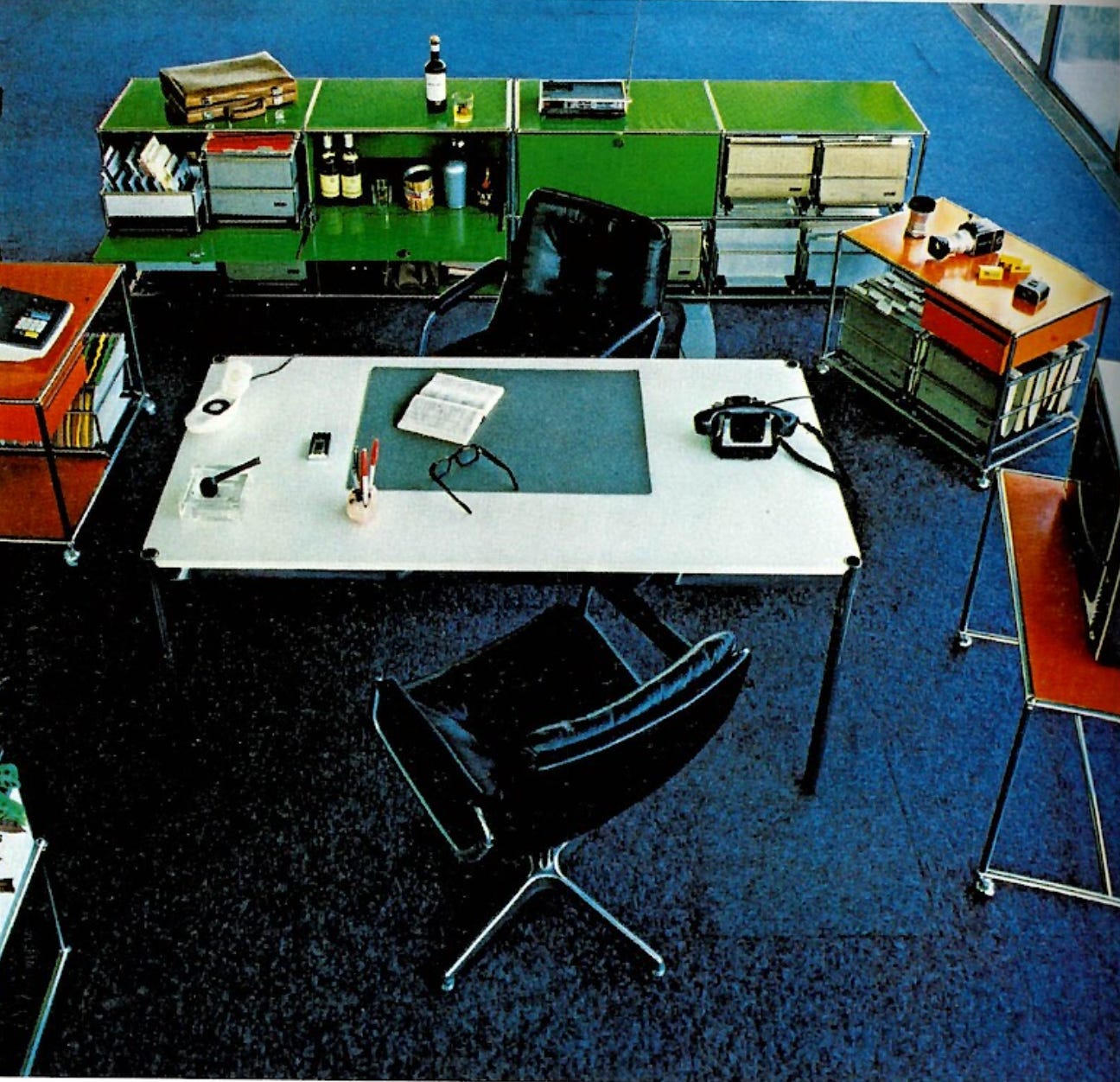
“Full Cockpit” USM headquarters, 1969.
USM offices were made public, and soon, without the intention of selling the furniture, potential clients began reaching out to order the designs for their own workspaces.


The office of Elie de Rothschild and the USM systems in the Rothschild bank, Paris.
The Rothschild Bank in Paris placed the first order in 1969, purchasing 600 USM workstations for their offices, and the Haller system has been available ever since.


. 1970 USM Haller product catalogue, file storage options.
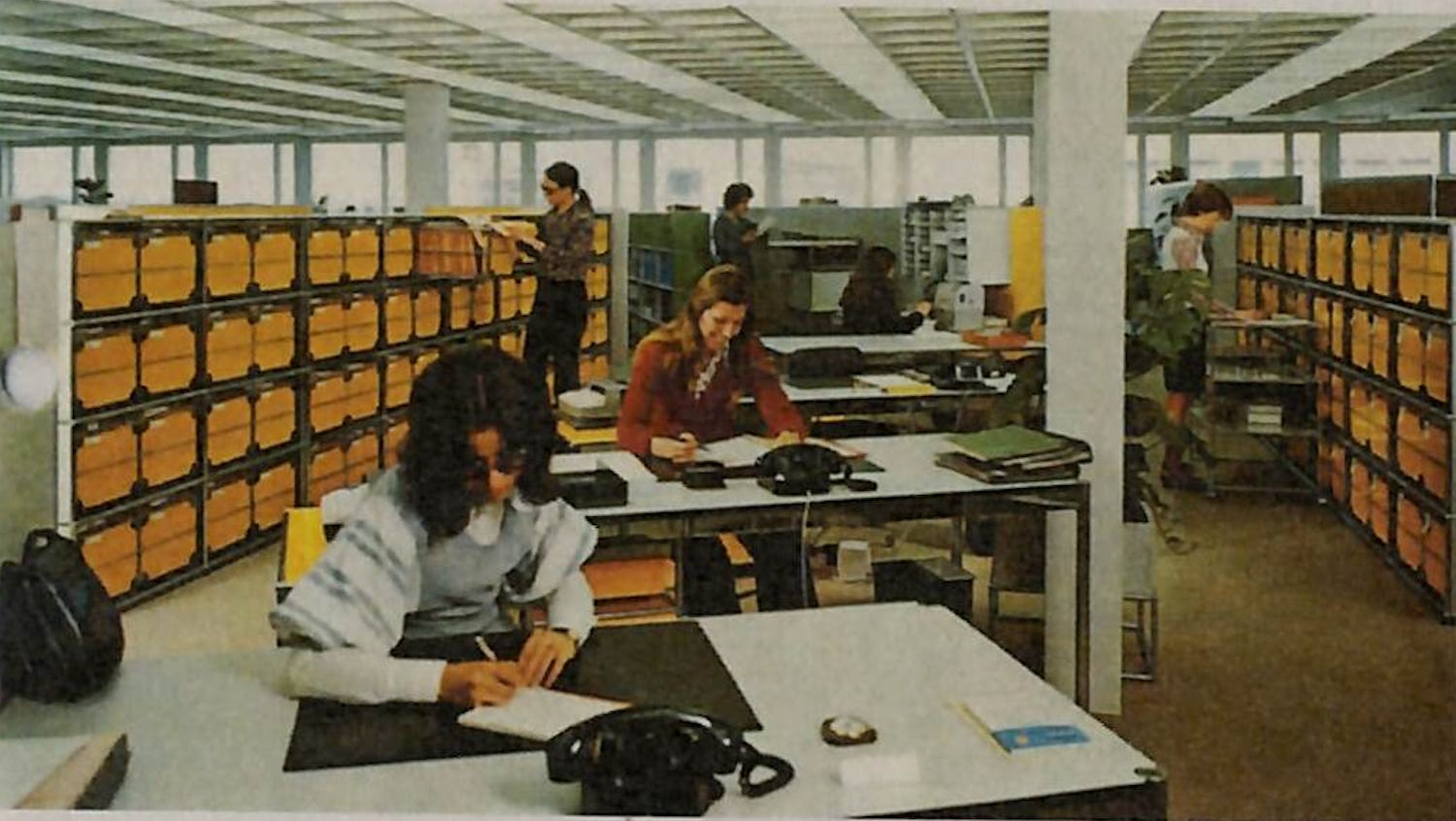
“Teamland” Open plan office concept, Zurich 1973.


USM 1976 Catalogue, showing various settings to use the pieces.
In the 80’s, private office orders were so frequent that they decided to make the systems commercially available.


Private bank interior, Nuremberg 1986; private bank interior, 1985; open-plan architect’s office, USA, 1982.
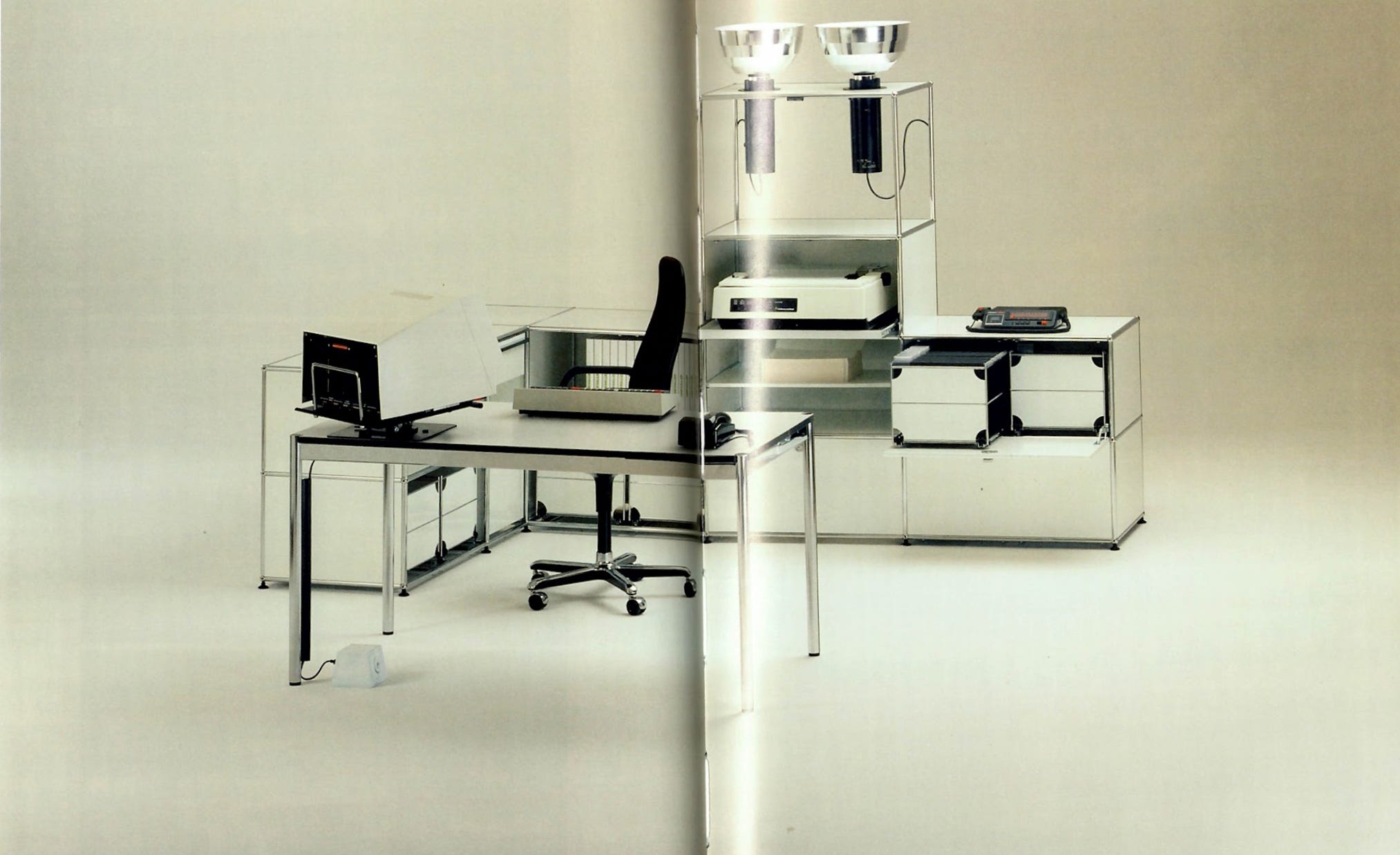
Single office system, 1981 USM catalogue.
In 1989, USM launched Kitos, a line of height-adjusting desks and tables. By the 90’s, they had introduced many variations to the system.


USM Haller office welcome desk, 1993; USM Haller bar storage, 1990; USM Kitos meeting area, 1996.
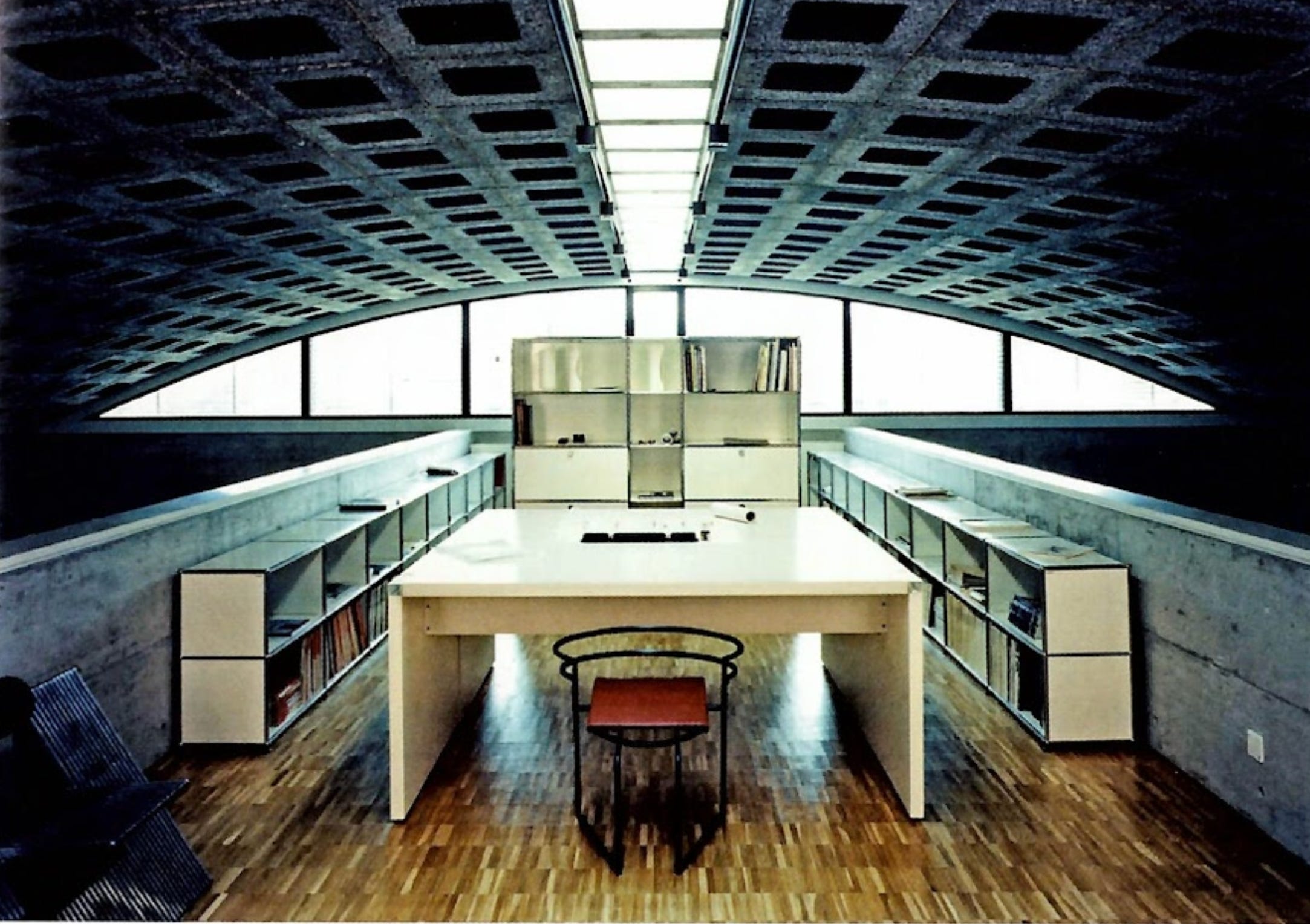
1991 Office by Mario Botto, Lugano.
Although the USM Haller system has always been a fan-favourite in the design world, it has recently reached viral popularity. With Gen Z’s aesthetic style encompassing bold colour, chrome and 70’s influence, it’s no surprise. What is most fascinating, contradicting companies such as Apple, that find a way to reinvent a product every year and make us crazy, is that the Haller line sold today is compatible with units made in the 1960’s. If you purchased a unit in the 60’s, 70’s, 80’s, or 90’s and wanted to add on or rebuild, you can still use your original unit. The company’s choice of 14 classic colours was so intentional that it has never changed. Every piece is still constructed in Munsingen, the same town where the company was born.
USM remains a family-run business, over a century and a half later. Their system has proven time and time again that built-to-last classics will find their way into the trend cycles of every time period.